
Make America graze again
Push to put more livestock on public lands threatens years of conservation progress
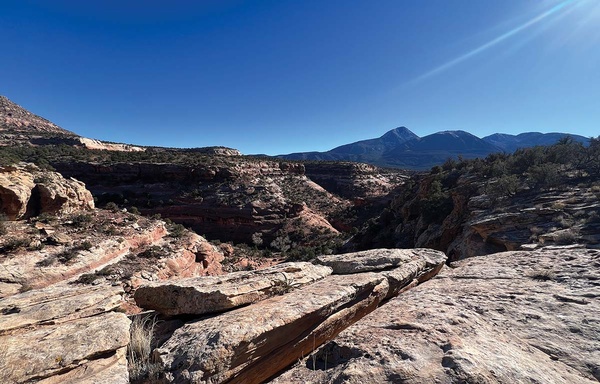
Views of the Sleeping Ute from inside Canyons of the Ancients National Monument. The Trump administration is making a move to put more cattle and sheep on public lands, even on leases that have been "retired," such as the Flodine and Yellow Jacket allotments. Located within the monument, they are home to countless cultural sites./ Photo by Missy Votel
When Donald Trump was elected president for the second time, we all knew what was coming to the nation’s public lands. The administration would favor extractive uses by eviscerating environmental protections, rolling back regulations and leasing out as much land as possible while handing out drilling permits like Shriners throwing candy at a parade.
Yet there was one realm where I figured the administration couldn’t bestow any more deregulatory gifts: public lands grazing. It’s not that I thought Trump would clamp down on the destructive practice, it’s just that I figured the status quo was about as permissive as it could get. Past administrations, Democratic and Republican, have generally shied away from updating or reforming public lands grazing policies out of fear of inflaming the West’s cowboy culture – even if it is based largely on myth.
But Trump, Interior Secretary Doug Burgum and Agriculture Secretary Brooke Rollins are intrepidly going where previous administrations did not dare: grazing reform. Though not in the way public lands lovers might have hoped. In fact, they are doing their best to make grazing policy even more lax with a goal of getting more cattle out there to trample public lands.
In March, Burgum and Rollins announced an MOU between the BLM and Forest Service designed to “boost the supply of American born, raised and harvested beef” by cutting “bureaucratic red tape.” The MOU has a goal of “maintaining grazing capacity wherever possible, including no net loss of Animal Unit Months within allotments,” even if those allotments are degraded or in poor health. In Burgum’s words, one goal is to “preserve America’s ranching heritage for generations to come.” Forgive me for getting anxious whenever I see “heritage” used in conjunction with public lands.
“Today’s signing sends a clear message: the Trump administration is putting America’s farmers and ranchers first,” Rollins said. Which brings up the question of what message the administration was sending in February when Trump signed an executive order to quadruple beef imports from Argentina in an effort to keep Big Macs affordable.
To help it carry out its mission, the BLM has released an interactive map aimed at putting more cattle and sheep back on public lands. The “federal grazing lands potentially available” map shows allotments that have been vacated, often as a result of deals brokered by environmentalists, with the intent of peddling the tracts to livestock operators. While there’s no guarantee the BLM would lease out all of the vacant tracts, the presence on the map of the ones vacated for environmental purposes is enough to set off alarm bells.
For example, the map includes 10 allotments in the high country around Silverton totaling about 70,000 acres. In 2023, the National Wildlife Federation paid the Etchart Sheep Ranch to vacate five of these allotments in an effort to give bighorn sheep more breathing room and protect them from diseases transmitted by domestic sheep. The deal was made with the hope that the leases would be retired permanently. Yet the inclusion on the map indicates they could see domestic sheep once again, emphasizing the need for legislation that would make such retirements perpetual.
Also on the map are the Flodine Park and Yellowjacket allotments in Canyon of the Ancients National Monument. In 2005, a rancher gave up the allotments, north and south of McElmo Canyon, respectively, and sold 4,500 acres of adjacent private land to the BLM to add to the national monument. Both allotments and the private land contain a number of intermittent streams, shallow canyons and cultural sites. They had been grazed relentlessly for decades prior and showed the wear and tear – much of the cryptobiotic soil had been trampled and destroyed and invasive cheat grass had infiltrated the grazed areas. An archaeological assessment conducted later found grazing had damaged dozens of cultural sites in the area.
In 2010, the BLM, which manages the monument, issued a new resource management plan, which allowed for continued grazing but also opened the door to permanently retire vacant grazing allotments if they failed to meet BLM rangeland health standards or if grazing negatively impacted cultural sites. Five of the 28 allotments in the most heavily visited areas – including Sand Canyon – were cancelled but not the Flodine Park and Yellow Jacket allotments, which were in retirement at the time.
Instead, the local county commissioners and a group of ranchers pressured the BLM to reauthorize grazing on both allotments – to bring them out of retirement, if you will. The BLM acquiesced, but environmentalists and tribes with roots in the area fought back, forcing the agency to do a more thorough environmental analysis. The opposition was enough to prompt the agency to delay issuing any leases, and the allotments remain in limbo.
Meanwhile, a team of scientists assessed the healing process on the Flodine and Yellow Jacket allotments, which by then had been cow-free for 11 years (though feral horses had grazed there). They compared biocrusts on those allotments to a fenced enclosure that hadn’t seen grazing for 53 years and a plot that was being actively grazed. What they found was both predictable and remarkable: The longer a plot went without cows, the healthier it was.
While the natural landscape can eventually heal itself, livestock’s damage to the cultural landscape is irreversible. BLM surveys identified 266 cultural sites on the two allotments, including 35 with “standing architecture.” At least 43% of those had been damaged by livestock.
Now what’s left may be in danger, too, at least if the new map is any indication. And guess what? Packing these allotments with cattle isn’t going to make that steak any cheaper. Only about 1% of American beef is grazed on public lands.
Check out the BLM Grazing availability map here: tinyurl.com/4hta36n5.
The Land Desk is a newsletter from Jonathan P. Thompson, author of “River of Lost Souls,” “Behind the Slickrock Curtain” and “Sagebrush Empire.” To subscribe, go to: www.land desk.org.
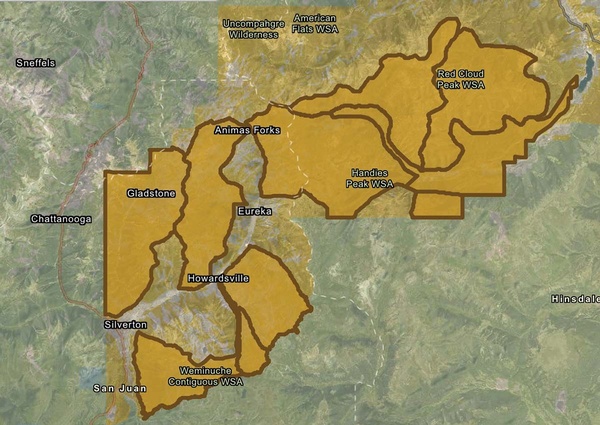
San Juan Mountains grazing allotments listed as "potentially available" for leasing on the BLM's new map. The five parcels closest to Silverton were retired in 2023 to protect bighorn sheep. / Source: BLM
-
- 06/04/2026
- Tougher on trash
- By Missy Votel
-
As human-bear conflicts rise, new state law targets ‘knowingly’ allowing attractants
- Read More
-

- 06/04/2026
- Redefining the business of art
- By Parker Yamasaki / The Colorado Sun
-
Colorado’s new A Corp model helps creatives retain control while attracting investment
- Read More
-
- 05/28/2026
- Quick 'n' Dirty
- By Missy Votel
-
Help for the Demon Bridge, Highway 550 N closure, and fire mitigation falls off
- Read More
-

- 05/28/2026
- Getting crafty
- By Haylee May / Colorado Public Radio
-
Colorado brewers buck national trend by adapting to changing times
- Read More
- Getting gassed
- 06/04/2026
-
Gas prices are once again giving America something to complain about. And while the local beer meisters at Ska Brewing can’t fix the price at the pump, the brewery is offering one small bit of relief: a new light beer that costs one cent less than the price of a gallon of unleaded gas.
Introducing Ska’s newest brew: West’s Easy Light Lager, because “everything else is so hard.”
- Short legs, big party
- 05/28/2026
-
On most days, Tracy Harwood spends her time as a court clerk for the City of Durango. But next Thurs., June 4 – International Corgi Day – she hopes to bring something entirely different to town: short legs, wiggly butts and oversized personalities.
- River cowboy
- 05/21/2026
-
It’s a mash-up made in Westernwear heaven. Sort of. Seems Chaco, the purveyor of the iconic strappy dirtbag river rat footwear, has joined forces with Wrangler, as in tight jeans, big belt buckles, bull riding and snap shirt fame.
- Making plans
- 05/14/2026
-
Wondering what’s up with the old 9-R Admin building at the end of E. 2nd Avenue that was going to be a fire department, then wasn’t going to be a fire department and is now going to be City Hall and the Police Department?The City of Durango will demystify plans for the historic building during a public session Wed., May 20, 5:30-7:30 p.m. at the Durango Recreation Center.