
Recharging the EV market
High gas prices, revamped incentives aimed at rural drivers may help accelerate sales
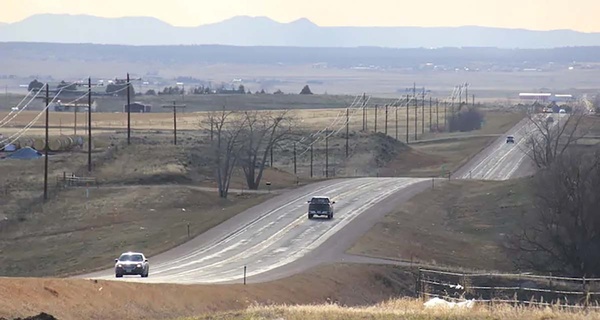
After a few years of red hot sales, Colorado's EV market is in a slump, mostly due to expired tax credits and rebates. However, a new bill, aimed at rural "superusers" would revamp the state's rebate program, offering more incentives for lower-cost EVS./ Photo by Allen Best
Sales of electric vehicles and hybrids in Colorado soared during the last few years. In late 2024, they constituted nearly one-third of sales. This year, they plummeted.
Might rejiggered incentives put wind in the sails of these sales? Or, for that matter, might high gas prices do the same?
The Colorado Automobile Dealers reported in its quarterly bulletin that battery-electric vehicle sales from January-March 2026 declined 63% compared to the same three months in 2025. In addition, the EV sector constituted only 9% in that time period compared to 21% a year earlier.
Colorado in past years has offered handsome financial incentives to spur EV sales. Coupled with federal incentives, the sticker prices on EVs were within range of those on gas- and diesel-fueled vehicles.
However, a federal tax credit of $7,500 per qualifying EV expired in September. In January, Colorado’s state EV tax credit fell to just $750, although the state still offers a bonus credit of $2,500 for EVs with retail prices of $35,000 or less.
This week, Jigar Shah, a former solar developer and founder of SunEdison, cited Colorado as a state that should rethink its incentives. Shah, who is responsible for one of the first solar projects in the San Luis Valley, oversaw the U.S. Department of Energy’s loan program under the Biden administration. Now, he hosts a podcast, “Energy Empire and Open Circuits.”
On LinkedIn, Shah recently has a post titled, “Colorado Shows Us What’s Possible on EVS – And What Is Missing.”
“Colorado, to its credit, has been scrambling in the right direction for years,” he wrote. “But even Colorado – arguably the most aggressive EV state in the country – is leaving its most powerful lever untouched.”
That lever, according to Coltura, a nonprofit that has mapped American gasoline consumption down to the census block level, are “gasoline superusers”: people who drive an average 40,000 miles a year. These superusers constitute just 8% of Colorado’s drivers yet burn 30% of the gasoline.
Nearly 43% of superusers live in rural areas and spend $8,554 annually on gas, representing 11% of their income. Of those superusers, 19.2% earn below the state median income.
In short, explained Shah, “these are Coloradans who are being slowly bankrupted by gasoline dependence. They stand to gain the most – by far – from switching to an EV.”
To help this happen, Shah argues that Colorado needs to recast its incentives. As of now, most rewards go to those of higher incomes. We need to figure out how to persuade lower-income, higher-mileage drivers to get EVs, as well.
The fix is simple, he says: convert all state EV incentives from flat-purchase rebates into per-mile rebates or tax credits. Bottom line: Switching all 318,000 Colorado superusers to EVs would cut the state’s transportation carbon emissions by 12.2% and total carbon emissions by 4.1%.
“The EVs have been going to the wrong people. The data knows who the right people are,” Shah writes.
Then again, I see lots of 8 mpg trucks driving on interstate highways. A little less pedal to the metal might save gas – and money. But that is another topic.
That said, we do need to make electric pickups attractive to rural drivers. The Wall Street Journal recently reported that a “secret team” of folks from Silicon Valley and Ford Motor have been blowing up the automaker’s assembly line to create a $ 30,000 electric truck. Last year, Ford killed its electric F-150 pickup, which cost between $50,000 - $77,000.
Meanwhile, back in Denver, lawmakers have been working on HB26-1289. The proposed law would make any EV with a manufacturer’s suggested retail price higher than $50,000 ineligible for support while offering extra credit for vehicles that cost less than $40,000.
“That will help make EVs more accessible for the most price-sensitive Coloradans who could easily benefit from more affordable transportation,” Travis Madsen, transportation program manager for the Southwest Energy Efficiency Project, wrote in an April memo.
The bill would help individuals – but it would also help Colorado’s air quality. Transportation, Madsen noted, is Colorado’s largest source of greenhouse gas pollution and among the most resistant to transformation.
Might higher gasoline prices spur transformation?
The dire Strait of Hormuz situation has incited much speculation. Economist Paul Krugman this week noted that EV sales in mainland Europe are up 51% from a year ago.
“It is now clear that the closure of the Strait of Hormuz marks an inflection point: the global green energy curve, which was already on a rapidly rising trajectory, has suddenly become even steeper,” Krugman wrote, citing a Financial Times report.
The United States produces more oil than it consumes. That said, oil is easily moved around – although, of course, not through the aforementioned strait in the Middle East.
At what point does $4 and $5/gallon gasoline incite a switch to a lower-cost fuel?
As SWEEP’s Madsen points out, charging an electric vehicle at home at night in metropolitan Denver is equivalent to paying about 90 cents per gallon for gasoline.
Allen Best is a Colorado-based journalist who an e-magazine about the energy transition called Big Pivots. Reach him at allen.best@comcast.net.