
A natural ally
We need mountain lions to do their job

A healthy mountain lion population is key to a healthy deer and elk population as lions often prey on CWD-infected animals./ Photo by Richard Callupe/Unsplash
As a former director of the U.S. Fish and Wildlife Service, I have hunted practically as long as I can remember. Hunting has been a lifelong passion and helped shape my values as a wildlife-conservation professional.
But I am against hunting mountain lions in Colorado. Today, I join many wildlife professionals and hunters who support Colorado’s Proposition 127 – Cats Aren’t Trophies – this November.
I’ve never been much for so-called “trophy hunting,” especially when the animals are chased to exhaustion by commercial outfitters using dogs and GPS tracking. Once these lions are perched helplessly in a tree, they are shot by a so-called “hunter.”
This kind of hunting violates a foundational value of “fair chase” that I was taught as a child. I was also taught that hunting is a form of harvest, reconnecting us to the land. Part of that connection is respect for the game we hunt, not desire to dominate or eliminate them.
But hunters are predators, and as a nation, we have long harbored a bloodlust for competitors like mountain lions. We have stoked societal mythologies and fears, and despite the wisdom of conservation scholars like Aldo Leopold, we have continued to scapegoat these creatures in the name of game management.
Maybe we do this to hide our own inadequacies. It is much easier to blame declining elk or deer populations on mountain lions or wolves than to grapple with habitat loss and fragmentation, drought or changing climates. Acknowledging those would require that we deal with our ever-expanding desires for more and cheaper and easier.
Yet here’s what’s important to know now: Emerging science tells us that these apex predators aren’t the enemy, they’re allies. They are likely providing an important ecosystem service in checking the spread of chronic wasting disease, CWD, an existential threat to healthy deer and elk populations, by targeting animals weakened by disease.
Forty-two of Colorado’s 51 deer herds and 17 of 42 elk herds are infected with this fatal, brain-wasting malady. The disease started in Colorado and spread across the Midwest and Rockies. It has killed hundreds of thousands of elk, deer and moose, and it is getting worse.
The pathogen is not a virus or bacteria but a “prion” – a protein that slowly and painfully destroys brain tissue in deer and elk. There is no evidence that these CWD prions are “zoonotic” and can infect humans, but public health officials warn against eating CWD-infected game as a precaution.
Prions aren’t living things, so they can’t be killed with antibiotic or antiviral medications. They can only be “deactivated,” and amazingly, science is telling us that they are deactivated in the digestive systems of predators like lions and wolves. That is why these animals are our natural allies.
As a scientist, I know that correlation is not causation, but sometimes it can be a powerful indicator. There is good science showing that lions will selectively prey on CWD-infected animals because infected animals are likely easier to kill. Where there are no lions, there are higher rates of CWD-infected animals; where healthy lion population exists, there are low levels of CWD infection or none at all.
Killing 500 lions every year in Colorado is not unscientific and unethical, it is interrupting the animals’ vital work as a bulwark against CWD. In Colorado, 2,000 residents will buy a license to kill a Colorado lion (0.3% of nearly 6 million citizens, and 0.6% of state hunters), and 500 nonresidents come into the state to buy a license for lions.
For as long as there have been hunters, and as long as hunters have been managing wildlife, we have scapegoated and persecuted apex predators, like mountain lions. It’s time we change. Mountain lions are our allies, so let’s start treating them that way. We need them to flourish.
Voting yes in support of Proposition 127 is a great beginning.
Dan Ashe is a contributor to Writers on the Range, writersontherange.org, an independent nonprofit dedicated to spurring lively conversation about the West. He was the 16th director of the U.S. Fish and Wildlife Service, serving for nearly six years.
-
- 06/04/2026
- Tougher on trash
- By Missy Votel
-
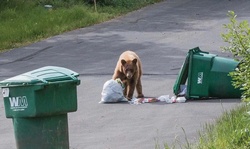
As human-bear conflicts rise, new state law targets ‘knowingly’ allowing attractants
- Read More
-

- 06/04/2026
- Redefining the business of art
- By Parker Yamasaki / The Colorado Sun
-
Colorado’s new A Corp model helps creatives retain control while attracting investment
- Read More
-
- 05/28/2026
- Quick 'n' Dirty
- By Missy Votel
-
Help for the Demon Bridge, Highway 550 N closure, and fire mitigation falls off
- Read More
-

- 05/28/2026
- Getting crafty
- By Haylee May / Colorado Public Radio
-
Colorado brewers buck national trend by adapting to changing times
- Read More
- Getting gassed
- 06/04/2026
-
Gas prices are once again giving America something to complain about. And while the local beer meisters at Ska Brewing can’t fix the price at the pump, the brewery is offering one small bit of relief: a new light beer that costs one cent less than the price of a gallon of unleaded gas.
Introducing Ska’s newest brew: West’s Easy Light Lager, because “everything else is so hard.”
- Short legs, big party
- 05/28/2026
-
On most days, Tracy Harwood spends her time as a court clerk for the City of Durango. But next Thurs., June 4 – International Corgi Day – she hopes to bring something entirely different to town: short legs, wiggly butts and oversized personalities.
- River cowboy
- 05/21/2026
-
It’s a mash-up made in Westernwear heaven. Sort of. Seems Chaco, the purveyor of the iconic strappy dirtbag river rat footwear, has joined forces with Wrangler, as in tight jeans, big belt buckles, bull riding and snap shirt fame.
- Making plans
- 05/14/2026
-
Wondering what’s up with the old 9-R Admin building at the end of E. 2nd Avenue that was going to be a fire department, then wasn’t going to be a fire department and is now going to be City Hall and the Police Department?The City of Durango will demystify plans for the historic building during a public session Wed., May 20, 5:30-7:30 p.m. at the Durango Recreation Center.