
Running on empty
Staffing cuts, strained resources leave West's wildfire response dangerously thin
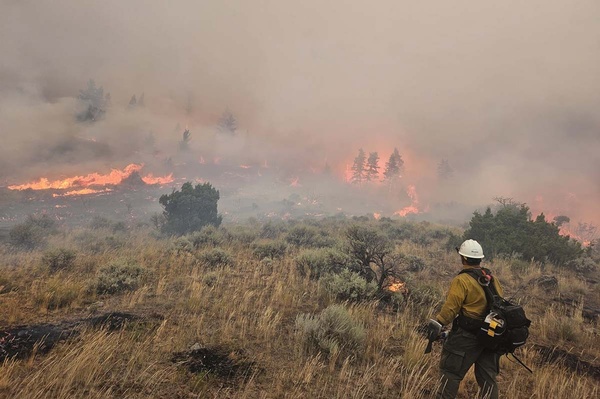
The Clearwater Fire burns west of Cody, Wyo., in the Shoshone National Forest in July 2024. Whether 2026 becomes a historically severe fire year remains to be seen. But the conditions – environmental and institutional – are aligning in troubling ways./ Inciweb photo
The West is staring down a dangerous wildfire year. A dry winter and historically low snowpack have set the stage for a potentially severe 2026 fire season. But the deeper problem is that the nation’s capacity to respond to wildfire has eroded.
For decades, large wildfires were managed through the Incident Command System, a framework that depends on highly trained teams at the federal, state and local level. These teams coordinate everything from strategy to evacuations and communication with communities.
Today, fewer than 38 of the largest teams, known as “Complex Incident Management Teams,” are expected to be available nationwide, a sharp decline from previous years. But even that number is optimistic, because many incident teams are no longer fully staffed. Personnel shortages have forced teams to share members; obviously those members cannot be deployed to different fires at the same time. On paper, capacity remains. In practice, it does not.
This is not an accident. It is the cumulative result of a decade of declining federal participation in wildfire management, compounded now by recent cuts to non-fire federal personnel. These cuts may seem unrelated to wildfire response, but they strike at its core.
Much of the wildfire system depends on specialists from other roles – hydrologists, biologists, planners – who step into fire assignments when needed. As those positions disappear, so do criticallly experienced responders.
What remains is a workforce that’s smaller and increasingly strained. Many of the people still filling these roles are senior employees who, during a busy season, can hit federal pay caps, effectively eliminating financial incentives to keep working long hours under dangerous conditions. At the same time, there’s deteriorating morale and ongoing administrative upheaval, all caused by staff cuts aimed at reducing the size of the federal workforce. As one fire manager put it bluntly, the only way to cope has been “to care less.”
Against this backdrop, the public is assured that wildfire staffing remains stable. But there has been no comprehensive accounting of how many fire-qualified personnel have been lost through early retirements and deferred resignations, and what could be lost in the new reorganization.
The gap between official assurances and operational reality is growing. This matters. It matters because the system is already under strain. As of April 23 this year, almost 1.8 million acres have burned nationwide, nearly twice as much as the year-to-date average over the previous 10 years. This includes the 640,000-acre Morrill Fire in Nebraska. Last year, which was a relatively mild fire year, the U.S. Forest Service still spent a record amount on fire suppression – nearly $5 billion.
Why? In part, because of how risk is increasingly avoided. Political and administrative pressure to suppress every fire has changed behavior on the ground. Local decision-makers, aware of the professional consequences if a fire escapes initial containment, are incentivized to order more resources than they might otherwise need.
The result is the scarcity that will show up in experienced leadership and fully staffed management teams. The remaining Complex Incident Management teams will be stretched thin, sometimes asked to manage multiple fires simultaneously. Fatigue will follow, and with fatigue comes risk – of poor decisions, accidents, or injuries and fatalities among firefighters. Communities will feel it, too.
Incident Management Teams don’t just fight fires; they serve as a lifeline for affected areas. They coordinate evacuations, connect local officials with state and federal agencies and help lay the groundwork for recovery. If those teams are unavailable or overstretched, communities will face greater disruption and slower recoveries.
Whether 2026 becomes a historically severe fire year remains to be seen. But the conditions – environmental and institutional – are aligning in troubling ways. The United States has spent years building one of the most sophisticated wildfire-response systems in the world. That system is now being asked to do more with fewer resources and higher stakes. Wildfire seasons have become longer and more devastating; they are a defining feature of the American landscape.
The question is not whether the fires will come. It is whether we can still respond effectively when they do.
David Calkin is a contributor to Writers on the Range, writersontherange.org, an independent nonprofit dedicated to spurring lively conversation about the West. Until recently, he was a senior scientist for the U.S. Forest Service’s Rocky Mountain Research Station. He now runs a wildfire consulting business in Missoula, Mont.
-
- 06/04/2026
- Tougher on trash
- By Missy Votel
-
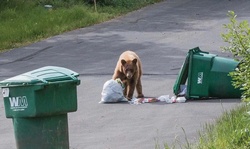
As human-bear conflicts rise, new state law targets ‘knowingly’ allowing attractants
- Read More
-

- 06/04/2026
- Redefining the business of art
- By Parker Yamasaki / The Colorado Sun
-
Colorado’s new A Corp model helps creatives retain control while attracting investment
- Read More
-
- 05/28/2026
- Quick 'n' Dirty
- By Missy Votel
-
Help for the Demon Bridge, Highway 550 N closure, and fire mitigation falls off
- Read More
-

- 05/28/2026
- Getting crafty
- By Haylee May / Colorado Public Radio
-
Colorado brewers buck national trend by adapting to changing times
- Read More
- Getting gassed
- 06/04/2026
-
Gas prices are once again giving America something to complain about. And while the local beer meisters at Ska Brewing can’t fix the price at the pump, the brewery is offering one small bit of relief: a new light beer that costs one cent less than the price of a gallon of unleaded gas.
Introducing Ska’s newest brew: West’s Easy Light Lager, because “everything else is so hard.”
- Short legs, big party
- 05/28/2026
-
On most days, Tracy Harwood spends her time as a court clerk for the City of Durango. But next Thurs., June 4 – International Corgi Day – she hopes to bring something entirely different to town: short legs, wiggly butts and oversized personalities.
- River cowboy
- 05/21/2026
-
It’s a mash-up made in Westernwear heaven. Sort of. Seems Chaco, the purveyor of the iconic strappy dirtbag river rat footwear, has joined forces with Wrangler, as in tight jeans, big belt buckles, bull riding and snap shirt fame.
- Making plans
- 05/14/2026
-
Wondering what’s up with the old 9-R Admin building at the end of E. 2nd Avenue that was going to be a fire department, then wasn’t going to be a fire department and is now going to be City Hall and the Police Department?The City of Durango will demystify plans for the historic building during a public session Wed., May 20, 5:30-7:30 p.m. at the Durango Recreation Center.