
A wrongful death?
Family of man killed in 2019 Silverton avalanche sues school, guide, airbag maker
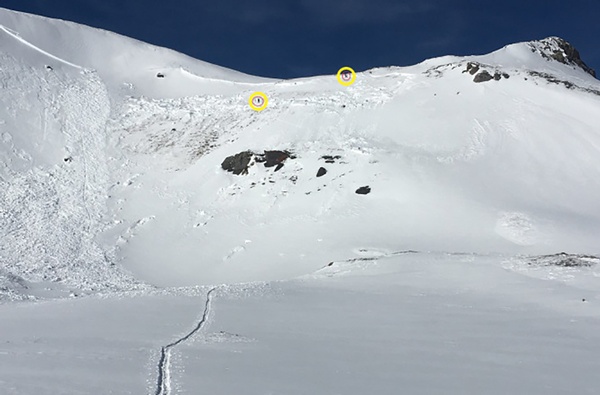
On Jan. 5, 2019, a fatal avalanche broke in Upper Senator Beck Basin, north of Silverton, killing Peter Marshall. The yellow circles on this photo, taken by the CAIC on Jan. 8, 2019, shows where the first (right) and second slides occurred. The slide to the far left was triggered intentionally to protect search and rescue operations./ Photo courtesy CAIC
The family of a Longmont man killed in an avalanche while taking a course with the Silverton Avalanche School in 2019 has filed a wrongful death lawsuit.
Peter Marshall, 40, died in a slide near Red Mountain Pass, in Upper Senator Beck Basin, on Jan. 5, 2019. A 68-page lawsuit was filed by his wife, Sara, and daughter, Amber, in Boulder County District Court on Jan. 2. It lists among the defendants: Silverton Avalanche School instructor Zachary Lovell, San Juan County Search and Rescue, and Backcountry Access, aka BCA, maker of avalanche safety equipment. The suit also names Kohlberg & Co., a private equity firm that acquired Boulder-based BCA and its parent company, K2 Sports, in 2017.
In the 2019 accident, which entailed two avalanches, Marshall was participating in a Level 2 American Institute for Avalanche Research and Education (AIARE) class with the Silverton Avalanche School. The first avalanche, which was triggered by Lovell, caught Marshall as well as five other skiers. It carried Marshall to the bottom of the slope where a second slide, triggered on an adjacent slope, broke and buried him in several feet of snow. Lovell and the other students were able to locate and uncover Marshall within 50 minutes, but it was too late.
The suit alleges a long list of infractions leading up to the slide, including fraud, misrepresentation, negligence and law breaking. It also charges BCA with making a defective Float 32 airbag that did not inflate after Marshall attempted to trigger it. According to the CAIC accident report, the airbag was functioning properly and the trigger was out of the pack strap, but the bag did not deploy. It’s unclear in the lawsuit how it was determined that the bag was faulty.
The suit goes on to state that the school and instructor acted “willfully, wantonly and recklessly, without regard for the consequences or the rights and safety of Peter Marshall or others” and “created substantial and unreasonable risks of serious injury and death to participants” in the class.
“Defendants were grossly negligent and that gross negligence was a cause of the injuries, damages and losses suffered by plaintiffs and the heirs of Peter Marshall,” the lawsuit states.
Marshall’s death was the state’s first avalanche fatality of the 2018-19 season and the first of a student at the Silverton Avalanche School in its nearly 60-year history. That winter, avalanche activity in Colorado was unprecedented in both size and scope, with March culminating in a record-setting span of Class 4 and 5 slides. According to the CAIC, there were 24 avalanches in the 4-5 category in the eight years previous to 2019 compared to 87 of that size during just two weeks in March 2019 alone.
In the 12 days prior to the slide that killed Marshall, the CAIC logged 72 slides in the north San Juans and rated avi danger at “considerable,” or Level 3 on a scale of 1-5. Threats that day included a buried weak layer that could produce persistent slab avalanches on 35-degree or steeper west-to-north-to-southeast slopes.
In its customary follow-up accident report based on site visits and interviews with school staff, witnesses and search and rescue, the CAIC noted several mistakes leading up to the avalanche. The three most critical ones included: the group skiing together all at once instead of one-by-one; misjudging the slope’s steepness, aspect and avalanche danger; and failure to recognize the potential for slides on nearby slopes.
The lawsuit alleges that although Silverton Avalanche School staff and instructors agreed not to travel in avalanche terrain that weekend, Lovell seemed inclined to travel “in more complex and bigger terrain despite the fragile snowpack and concerning avalanche conditions.” The lawsuit does not identify the source of this information.
The lawsuit also cites several other failures on the part of the school and Lovell, including failing to communicate the day’s avi forecast and allowing instructors to lead students “into, through and below” avalanche terrain. The lawsuit also charges that the school and Lovell falsely represented training and qualifications, constituting fraud under the Colorado Consumer Protection Act.
The lawsuit largely relies on the investigation of the CAIC, which has recently come under fire by some who say accident reports largely blame the victims, such as with a slide last March above the Eisenhower Tunnel. In that incident, snowboarders Tyler DeWitt and Evan Hannibal, who triggered the avalanche, handed over video footage to the CAIC believing it would help in future avalanche research and education. However, based on the ensuing report, Summit County filed criminal charges and fined the snowboarders $168,000 for their part in the slide, which buried a road and took out remote avalanche mitigation equipment but did not bury anyone.
The Marshall lawsuit does not cite a specific dollar amount in damages but “prays for and demands an award … to be fixed by the trier of fact in a reasonable amount” and also asks for court costs, attorney fees and “all such other relief” the court deems appropriate.
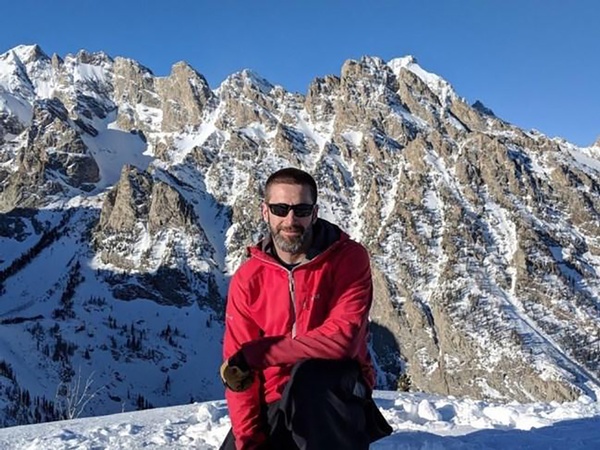
Marshall