
Community herbalism
A conversation with Brittany Osborn of Animas Botanicals
(Editor’s note: The following is the latest in a column written by students in Solana Kline’s upper-level Environment and Society course at Fort Lewis College. The column focuses on local sustainability, conservation and eco-social issues while giving students a chance to share their research outside traditional academic channels.)
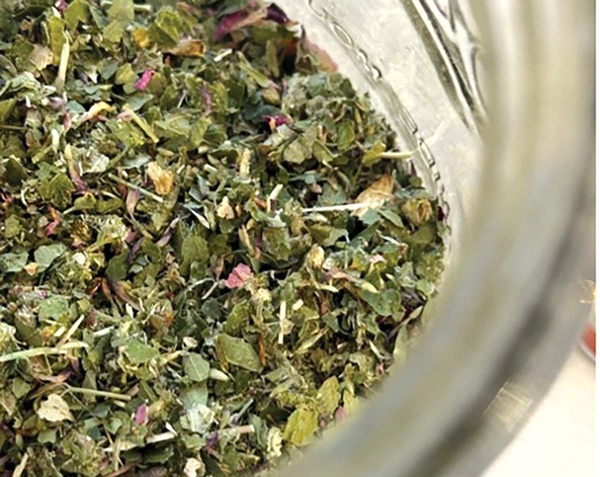
When you hear the expression “food is medicine,” what comes to mind? I picture steaming cups of hot herbal tea we prepare for our loved ones after they’ve come in from the cold, had a difficult day or are feeling under the weather. In my home community of Santa Clara Pueblo, a tribal nation in northern New Mexico, these cups of tea are often brewed from the greenthread plant (Thelesperma megapotamicum). This rich, amber-colored tea has a full-bodied flavor with just a hint of natural sweetness and is served as both a delicious accompaniment to a meal as well as a nutritious and medicinal offering. This herb is known in our Pueblo communities to aid with digestion and hydration, but its uses and benefits are diverse throughout tribal nations in the Southwest. In my community and family, and in so many others, an offering of herbal medicine is a direct provision of care and comfort that comes with inherent added benefits for nutrition and wellness.
Herbal medicine is one of the oldest therapies humans have utilized. While our preparations and uses for plants as medicine have evolved through history, there remains a significant and deeply ingrained relationship between medicinal plants and human societies. Plants and plant extracts have been used through early and modern societies to cure illnesses and enhance general wellbeing.
These abilities come from the phytochemicals that plants produce for several purposes, including defense against predators, attracting pollinators and adapting to environmental stresses. These diverse phytochemicals and their therapeutic and curative effects are the reason why plants are the source of approximately 40% of modern pharmaceuticals.
Beyond their direct medicinal qualities, studies have shown that nature-based therapies like herbal medicine not only increase physical wellness but also instill a greater sense of responsibility and engagement in environmental protection and sustainability. It is common for there not to be a specific word in Native languages that directly translates to “plants.” Rather, individual plants have their own names, often connotating a specific use as well as terms that indicate kinship.
Indigenous communities utilize the term “plant relatives” as an English equivalent of the terms in Native languages for plants that commonly denote kinship. When we think of plants as our relatives and neighbors in our ecosystems, it makes me wonder: how does herbal medicine inform our relationships with the environment?
Animas Botanicals is a farm and apothecary stewarded by clinical herbalist Brittany Osborn, who describes her introduction to herbalism as a path to finding a way to be in better relationship with the Earth. After graduating from Fort Lewis College and beginning to farm, Osborn took note of the frequency at which the herbs she saw used in herbal medicine preparation were imported. Growing practices were not well regulated, and some wild herbs were also harvested at rates that caused population declines.
As a budding herbalist, Osborn saw an opportunity to work with plants from a place of reciprocity. Today, she tends a “botanical sanctuary” of more than 150 medicinal species, grounded in the commitment to learn from the intelligence of plants and plant communities, and to incorporate that knowledge into her herbal medicines. She emphasizes that the body is an ecosystem unto itself, in constant exchange with our environment, which is why it is so critical for herbal medicine growers and preparers’ standards to exceed organic certifications.
Herbalists including Osborn observe that the medicinal qualities of plants decrease when harvest or growing practices are unsustainable or occur in depleted environments. Because of this, it is necessary to engage in active stewardship of herbal plants and the landscape.
Through Animas Botanicals and Osborn’s stories and approach to crafting herbal medicines, we see an example through which kinship, ecological stewardship and physical wellness align. In this way, herbal medicines offer us much more than nutrition, comfort and healing. They also provide an opportunity for us to engage with our ecosystems in a reciprocal and participatory way, remembering that the health of our bodies is deeply intertwined with the health of our ecosystems.
As Osborn reflects, “Our very life force depends on these beings. How often do we stop and look at the plant next to us and say, ‘Hi’ or ‘Thank you?’”
Kayleigh Warren is a senior at Fort Lewis College, majoring in Environmental Conservation and Management. She is a tribal member of the Pueblo of Santa Clara in northern New Mexico.