
Counter culture
Taking a look at modern-day crusaders in search of a simpler life
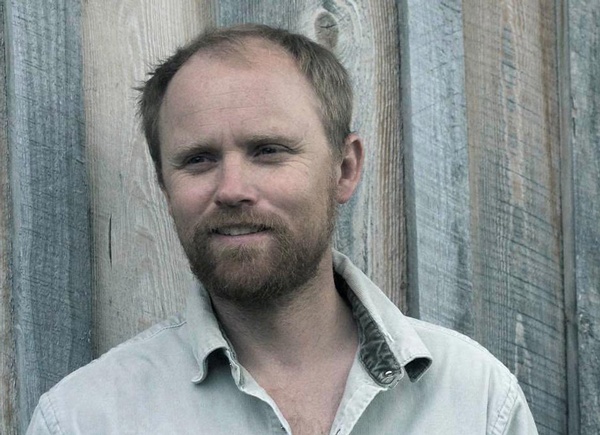
The last time writer Mark Sundeen talked in Durango, he told us about “the man who quit money.” This time around, on Tues., Feb. 7, at Maria’s Bookshop, he’ll be reading from his latest (and fourth) book, The Unsettlers, a series of nonfiction stories about three families leading unconventional lifestyles.
The Man Who Quit Money was a 2012 book about Daniel Suelo, a Moab resident who, as the title suggests, shunned the use of money. Sundeen says that while some inquisitive readers were inspired by Suelo, they had trouble emulating his lifestyle (when the book was written, Suelo was living in a cave near Moab).
Thus, the question in Sundeen’s mind became: “How radical could you be and still have kids?”
The result is The Unsettlers: In Search of the Good Life in Today’s America. Sundeen uses a similar writing style as he did in The Man Who Quit Money, switching back between his own life and his mental dialogue, and his subjects. It’s a heart-warming approach. Sundeen is both a rebel and an everyman, constantly questioning social norms, with the state of planet Earth always in the background and often the foreground.
Sundeen, who grew up in Southern California and graduated from Stanford, was first inspired by dirtbag climbers he’d seen living in Joshua Tree, Calif. “I liked the freedom of the vagabond life, of not having a job or bills,” he said. “(They did) exactly what they wanted every day.”
This passion for alternative living led him to become a longtime Outward Bound instructor, based out of Moab. But, like many before him, he eventually became burnt out on the lifestyle. Still, he realized he had the desire to “resist the state and corporate power.” He dabbled in the off- the-grid lifestyle but came to the conclusion that he was not meant to be a farmer. Ultimately, he has found the pen to be his greatest calling.
“I enjoy writing more than I enjoy farming,” he noted. “This is what I need to be doing. It is my meaningful work.”
For Unsettlers, Sundeen spent more than three years researching the families and writing the book. “These three families have succeeded in extracting themselves from the global economy. They’ve made sacrifices,” he said. “At first, many of them seemed extreme, like the family (of four) in Missouri who doesn’t use petroleum. But it makes sense for their beliefs. They are all about nonviolent direct action ... buying petroleum, to them, is financing violence.”
Sundeen seems dedicated to a realistic, middle class approach to this lifestyle. He noted that many of the places in the United States where the self-sufficient farming life is possible have become too expensive. “I expected this book to be about people in Colorado, California and Vermont, but in the past 40 years, it’s become too expensive to homestead without previous money, or another source of income,” he said. “Thus, the unsettling is now more realistic to do in places in the Midwest and the South.”
The subjects in the book also forsake many accessories to modern life that most regard as essential – like electricity and Internet. Sundeen also noted the pressure from society for them to be successful as well as provide their children with these modern amenities. “The questions are like, ‘you’ve spent all that money on a college degree and you’re not using it’ or ‘it’s not fair to deprive your children of computers/piano lessons’ or ‘you can’t fight the power when you’re not on social media.’”
Always one to look inward, Sundeen is completely aware of the hypocrisy of his own life. While he is inspired and motivated by these families,
he still remains plugged into the “Petro State,” flying and driving around to promote books, using up the very same resources his muses forsake. “That’s bad, but I don’t think that hypocrisy is the worst sin,” he said. “The worst is inaction and despair. Any type of belief one will fall short of. In our civilization, I can’t reach an audience without the use of fossil fuels. I’m doing my best.”
Writing Unsettlers has changed Sundeen. In an age of independent writers and bloggers covering unconventional topics, Sundeen has been an outlier, always one to get a book deal or a magazine contract before going out on assignment. But after witnessing this new wave of Americans, he is more inspired to follow his heart first, and then see what happens.
After finishing writing the book, he spent last spring volunteering to build a straw bale house in Moab. “It was the exact sort of physical work for a good purpose that I wrote about in this book.”
Later in the fall, he found himself drawn to the Standing Rock protests in North Dakota. “I thought the Native Americans there were doing the most important action in the world, and I wanted to bring that to the public.”
He sought out magazine contracts for the Standing Rock story, but ultimately did not get one. But he went there anyway. In August, he said the mood was joyful and festive, full of prayer, song and dance. In November it was dark, there was stadium style lighting and plane surveillance. It felt like a prison camp. But when he went back in December, when the veterans showed up, it was energized again, with high spirits that people have the power.
He expects to return again in the future to write about it.
And he’s going to continue to seek out meaningful work. “Resistance to the state and corporate power is not all about renunciation,” he said. “It’s about voluntarily embracing limitations, and as a result finding a deeper abundance. Often that translates into finding meaningful work. If you love what you do, and feel like it’s doing good for the world, some of the infinite material desires fall away on their own.”