Making the pitch
City debates location of permanent campground for the homeless
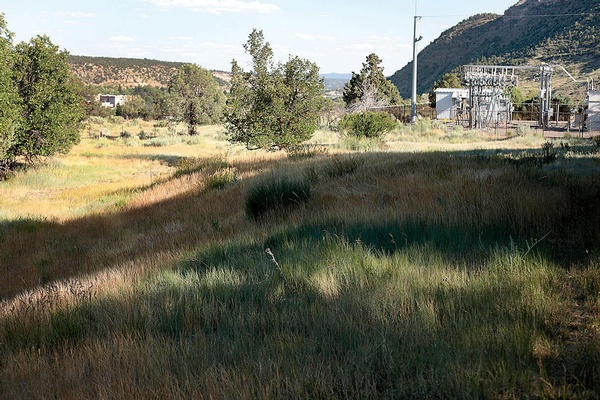
The City's first possible location for a homeless campground was on a small piece of city-owned land (above) between the Community Shelter and an electric transformer station, just northeast of Greenmount Cemetery. Some Durango City Councilors and social service workers in the area opposed the possible location, which means the city is still looking./Photo by Jennaye Derge
It wasn’t about whether or not a campground for the homeless was an idea worth exploring, but rather where, exactly, they would pitch their tents.
City staff came to the Durango City Council on Tuesday night with preliminary plans to build a permanent camp-ground for the homeless on a small patch of city-owned property between the Durango Community Shelter and a nearby electric transformer station, just northeast of Greenmount Cemetery
According to assistant city manager Kevin Hall, the idea originally came from residents living along Ella Vita Court, which has become the thoroughfare for many homeless heading out to a temporary campsite near the Tech Center. The potential for wildfires, criminal activity and public health issues topped the list of concerns expressed by neighbors, council members and law enforcement officials at Tuesday’s meeting. One thing they all agreed on was that the status quo was not working.
“We need to find an answer for those folks (living on Ella Vita Court),” Hall said.
The proposed campground was modeled after one in Las Cruces, N.M., called Camp Hope, which opened six years ago. By offering the homeless population a specific area where they can camp and have access to services, local officials would be able to mitigate the fire, public health and safety concerns.
It turns out, the model of a self-policed, camping area for the homeless is something La Plata County is already attempting.
La Plata County Sheriff Sean Smith said during Tuesday’s meeting there’s an area designated for the homeless just southwest of the proposed location, near the Tech Center and Overend Mountain Park.
Currently, the area has 25 campsites with about 33 individuals living there. There are four camp hosts as well as a basic work program and rules. The temporary status of the campsites, however, still leaves the door open to fire hazards and other issues, like not having a bathroom.
One of the reasons Camp Hope is considered a success nationally is because most of the residents are able to
transition to permanent housing, something the low-priced rental market in La Cruces is able to accommodate. With Durango’s high cost of living, it won’t be as easy.
Although some of Camp Hope’s residents have been there since its opening, most move on, and that’s how it’s supposed to work. Smith said hundreds of people have transitioned out of Camp Hope and into more permanent housing in the six years it’s been in operation.
Today, the campground has permanent bathrooms and showering facilities, which help with the public health issues. Those are things a campground in Durango could offer.
As for safety, the thought is that a dedicated campground would also help to curb those concerns. Since its opening, Camp
Hope hasn’t had a single violent incident, Smith said.
Another key to Camp Hope’s success is its access to social services, like food and addiction counseling. The campground is surrounded by five nonprofit organizations that offer such services.
That’s why the city considered the location off Avenida del Sol. With the Manna Soup Kitchen, Durango Community Shelter and other social services already there, it seemed like a logical location for a new homeless campground.
But, it turned out not to be so simple.
Elizabeth Salkind, executive director of Housing Solutions for the Southwest, the nonprofit running the community shelter next to the proposed campground, said its presence would have a dramatic impact on the families living there.
It could not only hurt the progress made by the people at the shelter, but could also affect Housing Solutions’ efforts to get grant funding to support their existing programs.
The city estimated the cost of the camp-ground at $250,000 for construction with $60,000 needed for annual operation and maintenance. City Manager Ron LeBlanc suggested splitting construction costs with the county, but the ongoing operational costs are another matter.
The biggest concern for Councilor Sweetie Marbury was who would manage the Durango campground even if the right location is found.
In the La Cruces model, the camp is run by a local nonprofit and donations pour in from the surrounding community, which is more than double the population of La Plata County.
The same would need to happen in Durango. So far, none of the local nonprofits have stepped up to say they would take on management of the campground, but some councilors felt if those groups had a better idea of the location, size and scope of the project, one might.
Some of the other sites presented at Tuesday’s meeting were at the Dog Park near Smelter Mountain, a county plot near the jail in Bodo Park, and other open spaces by the city’s landfill.
Each one presented its own challenges. For example, the Bodo Park location would require campers to travel a greater distance, which they might not be willing or able to do. The Dog Park site, on the other hand, would be located along a major highway leading into Durango, which the city often considers its first impression on visitors.
Over the next few weeks, city staff members plan to put together a list of other possible locations for the campground. They’ll bring the information back to Council for consideration.
“If we do the camp in the wrong place, it’s going to fail,” Smith said.