
No man's land
Canyons of the Ancients lands on Trump's 'review' list
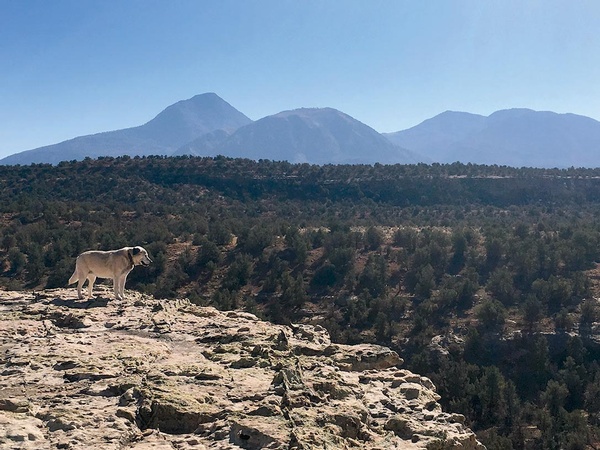
Canyons of the Ancients became a national monument on
What felt like a win almost 20 years ago could suddenly be a loss for the Southwest.
In the wake of a recent executive order, signed by President Donald Trump on April 26, almost a quarter of the country’s 117 national monuments are scheduled for review.
The order directs Secretary of the Interior Ryan Zinke to review all the national monument designations made in the past 20 years that cover more than 100,000 acres.
The list includes the most recent addition, Bears Ears National Monument in Utah, a controversial designation made in the final days of former President Barack Obama’s administration, and the Papahanaumokuakea Marine National Monument, which covers 582,578 square miles around Hawaii, first designated by President George Bush and expanded by Obama.
Also on the list of 27 monuments is one of the Southwest’s treasures – Canyons of the Ancients. The area covers 178,000 acres, Sand Canyon, the Anasazi Heritage Center and more than 6,000 ancient sites, each telling a key part of the Puebloan people’s story – how they thrived, survived and eventually left the area.
“It’s frustrating – obviously – to feel like we have to go back to square one,” said Mark Pearson, who recently returned to take the helm as executive director of the San Juan Citizens Alliance. “We would have hoped 20 years ago this landscape would have achieved a level of permanent protection.”
Canyons of the Ancients was first declared a national monument on June 9, 2000, under former President Bill Clinton. He used the Antiquities Act of 1906, which became law under Present Theodore Roosevelt, who’s also responsible for the creation for the national park system.
The Antiquities Act is directly tied to the Southwest, according to Pearson. In the early years of the 20th century, lawmakers were looking to protect the Southwest’s Native American historical sites from looters, including the cliff dwellings and surrounding lands of Mesa Verde. The momentum behind protecting Mesa Verde is what shaped the Antiquities Act. Less than three weeks after it was passed, on June 29, Mesa Verde received national park status.
Today, more than a century later, it seems the Southwest is again in need of protection.
Changing perceptions
In the late 1990s, then-Secretary of the Interior Bruce Babbit was starting to look at historical sites in a whole new way.
Babbit had been coming to the Southwest since he was a kid, Pearson explained. He was enamored by the landscape and the Puebloan people who called it home. He also knew it needed to be protected.
With thousands of ancient sites spread across almost 200,000 acres, it became clear to Babbit the landscape was as much a part of the Puebloan culture as the artifacts discovered there. So, instead of seeing an individual cliff dwelling or rock carving as a single entity needing federal protection, he began to see the landscape itself as part of the culture that needed protecting.
He originally created a committee, on which Pearson served, to make a formal recommendation to the Clinton administration concerning the area that later became Canyons of the Ancients.
As the only conservationist on the panel – and feeling outnumbered by oil and gas industry appointees – the committee eventually agreed to disagree, and no official conclusion was reached.
Instead, Babbit proposed Clinton designate the area a national monument during his last year in the White House, which he did on June 9, 2000. The change he started that day is something still carried on today – that the landscape is as much a part of the cultural story as each individual tower, cliff dwelling or rock carving.
The people’s choice?
According to the official press release from the Interior Department, the review of the Canyons of the Ancients and the other 26 monuments is the “first ever formal public comment period” on monument designations made under the Antiquities Act.
Pearson hopes it’s a sincere effort.
After all, public input is a big part of how the Canyons of the Ancients is managed today. Almost immediately after it became a national monument, key stakeholders went to work on an official Management Plan.
Elected local leaders, landowners, oil and gas representatives, conservationists, archaeologists, federal agencies and others spent a decade putting together the rules that would not only protect the thousands of relics and historical sites, but would also protect existing uses – even when it came to carbon dioxide drilling, livestock grazing and recreation.
Pearson said the management plan is a testament to the fact that a monument designation can protect what it was meant to protect, while still allowing for modern uses.
The first monument up for review under Trump’s executive order is nearby Bear’s Ears in Utah. It’s unclear if the White House is looking to rescind the designation or just scale back its size. Either way, it’s a bellwether for the review process – particularly when it comes to how the federal government responds to public comment – revealing how subsequent reviews will play out.
Pearson said for many, including the Southwest’s elected officials, it’s a test of more than just rhetoric. It is one thing to claim support for public lands, he added, but another to actually stand up for them.
“Are we going to stand up and defend these types of protections?” he asked. “What will our state look like 100 years from now?”
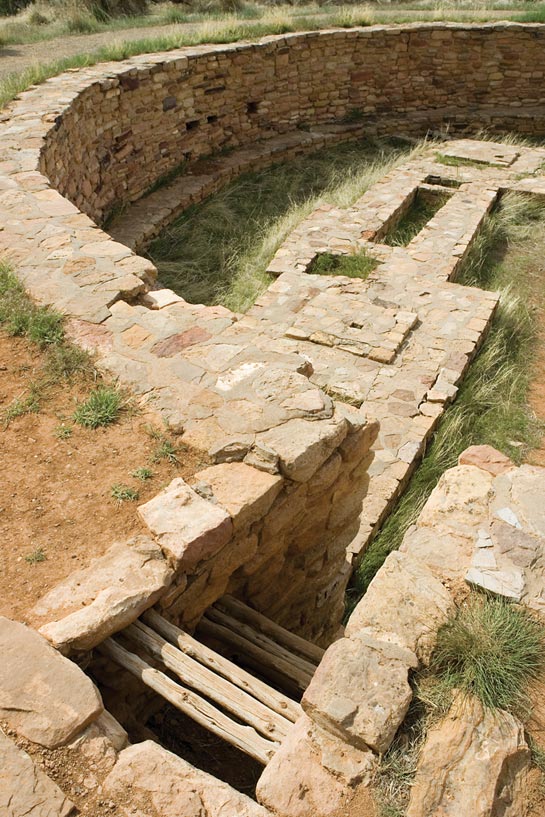
Canyons of the Ancients National Monument covers 178,000 acres and includes more than 6,000 ancient sites, such as the one above./File photo