
Out of sight
With natural food abundant, bear incidents decline
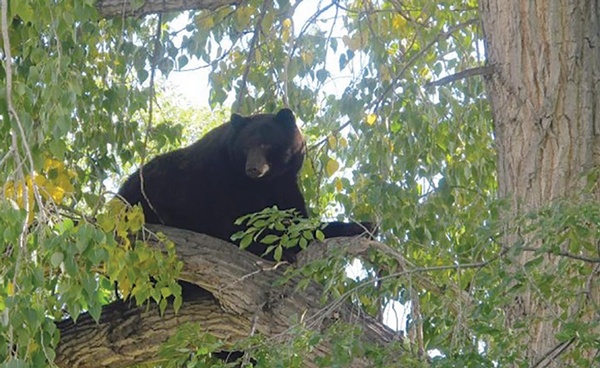
Bears don't necessarily choose human food sources over natural ones. They seem to weigh the risks of coming into human developments when trying to get the calories they need –20,000 a day./Photo courtesy of John Viner
It’s been several years since food was scarce. The past four have been good ones for the black bear’s natural food sources, like acorns and chokecherries, giving the Southwest’s furry residents little reason to rummage through the trash.
That, of course, doesn’t mean the year has been free of human-bear conflicts.
According to Colorado Parks and Wildlife researcher Heather Johnson, six bears have been lethally removed around Durango so far this year, either by CPW officials or landowners.
“There’s all kinds of risks with foraging around people,” she said. And, it seems, bears understand that.
Bears don’t necessarily choose human food sources over natural ones. According to Johnson, they seem to actually weigh the risks of coming into human developments when trying to get the calories they need – which is a whopping 20,000 each day.
They tend to use human food just as a supplement to their natural diets.
“If those natural food resources are there, they prefer to use that,” she explained.
It’s one reason bear incidents decline when it’s a banner season for acorns and berries.
Johnson said last year there were 280 incidents, or reports of bears in trash, in the Durango area during July and August. This year there have been only 50 reports.
The last time natural food was hard to find was in 2012, the second year of a six-year bear study headed up by Johnson.
This is the final year of the study, and Johnson and her team will head out to the dens of their participants this winter and remove their tracking collars to collect data for the last time.
It’ll take a couple years to put it all together, but Johnson said they’ve learned a lot about the local bear population, as well as how they are affected by climate change and human behavior. They’re currently analyzing data and putting it all together in several papers, likely ready for publication next year, with more to come.
The study came about as a tool for wildlife managers to identify strategies for reducing human-bear conflicts, which continue to increase in Colorado and across the nation as people move further into the bear’s home turf and droughts become more frequent.
It’s often thought, one way of doing this is by simply locking up the trash cans.
In 2013 and 2014, CPW officials distributed more than 1,000 bear-resistant trash cans to Durango neighborhoods as a way to collect real numbers for the study. Using initial counts, control groups and constant observation, researchers can tell if the bear-resistant cans really make a difference.
Preliminary data shows the areas with the bear-resistant containers have fewer reports of bears in trash but, unfortunately, not everyone is actually locking up the cans.
Bryan Petersen, executive director for Bear Smart Durango, a local nonprofit dedicated to reducing bear-human conflicts in the city and La Plata County, said most wildlife ordinances across the country include passages requiring proper use. It’s not enough to have the bear-resistant trash can, residents need to use them properly.
Locally, the county and city don’t use the specific phrase “proper use” in their ordinances. Instead, they require residents either use bear-resistant trash cans or don’t put their trash cans out until after 6 a.m. on the day of pickup.
Since its inception in 2003, the Bear Smart organization has been working with city and county officials to reduce human-bear conflicts. “The city is making strides,” Petersen said. “In the county, we have a lot of work to do yet.”
He explained out of the three trash hauling companies serving the county, only Phoenix Recycling offers bear-resistant trash cans. “Even if residents want to do the right thing, they’re having a hard time,” he added.
It’s something on the docket for future meetings with the Bear Working Group, a collaborative effort with Bear Smart and other community stakeholders, who help with education, outreach and brainstorming when it comes reducing human-bear conflicts. Their most recent efforts resulted in a new fruit gleaning program.
Petersen said the program is still in the early stages, but has a lot of potential. At this point, what they need are people to take the fruit. He said the site has about 20 listings of local residents who have the extra fruit. They just need someone to come get it – before the bears do.
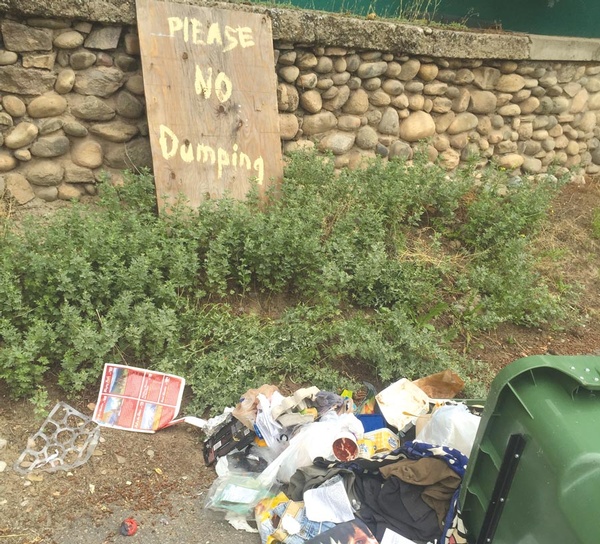
Bearproof containers do no good when they're not secured, so remember to latch those lids. Because bears can't read./Courtesy photo