
Planned Parenthood reopens
PPRM president credits local community in getting clinic running again
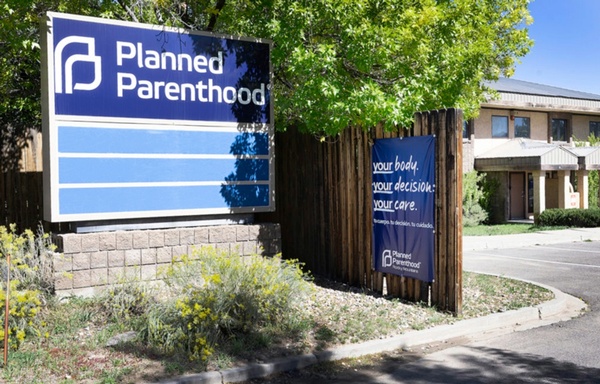
After closing abruptly in September 2024 due to a provider shortage, Durango Planned Parenthood has re-opened. Although it began serving clients two days a week in October, the low-cost reproductive health clinic held an official re-opening May 6 at its location in Bodo Park.
“In this moment of national political uncertainty, when reproductive health care providers across the country are being forced to shut their doors permanently, we are so grateful to be back to providing in-person services in Durango,” Adrienne Mansanares, President and CEO of Planned Parenthood of the Rocky Mountains, said. Mansanares and dozens of community members attended the re-opening. “This reopening wouldn’t have been possible without the continued generosity and advocacy of our donors and supporters in the Durango community."
PPRM said the past closure was “a direct consequence of the escalating national health care crisis, driven by severe provider shortages and relentless political attacks on reproductive rights.” The clinic still offered virtual services during the closure.
“We made the incredibly difficult decision to temporarily close this location in September 2024, due to the ongoing national provider shortage,” Mansanares said in a statement. “Despite these challenges, PPRM remained committed to the Durango community, serving hundreds of patients through its Virtual Care Center and Community Health Programs over the past year.”
The future of PPRM was in jeopardy last year after it lost federal Medicaid funding. However, the state of Colorado stepped in to fill the gap with state Medicaid funds, allowing Planned Parenthood to continue serving Medicaid patients.
Mansanares said the Durango clinic is currently open Mondays and Tuesdays with one nurse practitioner on staff. Since reopening, the clinic has served roughly 400 patients, with 12% of those coming from out-of-state, primarily Texas and Arizona.
On top of a host of routine reproductive health care services, the clinic provides medication abortions within the first 10 to 11 weeks. That procedure relies on mifepristone, one of two drugs commonly used in medication abortions that has become the subject of a lawsuit attempting to ban it. The U.S. Supreme Court has temporarily allowed continued access to mifepristone while litigation plays out.
Beyond abortion and contraception services, the Durango clinic also provides transgender hormone therapy. Mansanares said Planned Parenthood also has seen an increase in transgender patients from out of state in recent months due to restrictions on gender-affirming care in their states.
For now, Mansanares said the two-day-a-week schedule appears sufficient, but more days could be added if demand increases. “We regularly conduct comprehensive needs assessments to ensure we’re meeting the community’s needs,” she said. “Right now, in Durango, patient volume supports two days of in-person services each week, but we’ll continue to reassess and adjust as needs evolve.”