
POW-er to the people
National climate and environmental group Protect Our Winters starts SWCO chapter
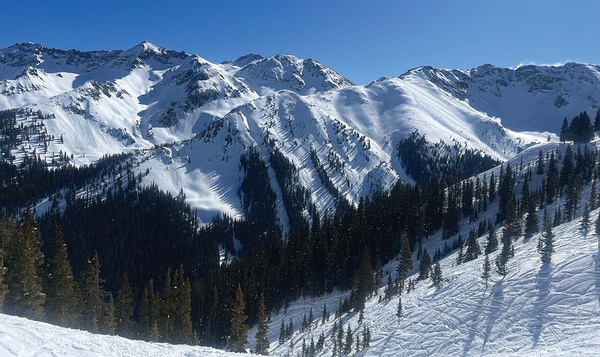
Silverton Mountain ski area in February 2025. The national climate and environmental advocacy group Protect Our Winters, or POW, is starting a chapter in Southwest Colorado to help ensure skiing and other beloved forms of winter recreation don't succumb to climate change./ Telegraph file photo
In a season when snow has been scarce, Durango is about to get an infusion of POW of a different kind. Protect Our Winters, the snowboarder-born climate activism group turned national juggernaut of political change is launching a chapter in Southwest Colorado.
The group will hold its first meeting today, Feb. 26, from 5:30-6:30 p.m. at the Durango Public Library.
“The idea behind it is, for one thing, building community and having that stoke and support around the environment, which everyone who is going to be showing up cares about,” POW’s Western Slope Field Organizer Leda Stinson Ebert said Tuesday. “It’s about finding ways to make it fun and engaging but also learning what POW can do to support the Western Slope and specifically, La Plata County, in taking action around sustainable initiatives, whether that’s supporting solar, voting in local electric co-op races or signing petitions to protect public land.”
Stinson Ebert, a resident of Ridgway, said the new chapter will cover La Plata, Montezuma, San Juan, San Miguel, Dolores and Ouray counties. Unlike POW’s well-known and larger political lobbying arm, she said this latest effort is a grassroots initiative launched by POW last year to create activism around smaller, local or regional issues. Similar “micro” chapters, if you will, are also being launched in California, Montana, Nevada and New Hampshire.
“This is a very localized focus. So people are like, ‘this is relevant to me,’” she said. “This has not existed before, so it’s kind of exciting. Historically, POW has been a lot of lobbying and taken a top-down approach. This is coming from change at the other end, like local, small-scale elections, local outreach and education.”
She said across the Western Slope, POW is already working on several initiatives, like advocating for utility-scale solar projects, and working to combat misinformation and provide people with facts and up-to-date information. However, she also said the group wants to hear what’s important to locals. “It’s going to be up to the people who show up and what they want to do,” she said, adding that the ultimate shape of the group depends on that. “If there’s people who are excited to be doing event outreach and education at local events, we’ll provide them with the resources and training to do that. There’s a lot of flexibility and a lot of opportunity.”
The plan is to have the meetings, which are free to attend, move around to various towns from month to month, with the ability to attend in person or via Zoom. She would also like to eventually hold them at small businesses, such as breweries or coffee shops, to support local economies.
Stinson Ebert said after the last few dismal winters, people are starting to feel the effects of climate change up close and personal and want to do something to help. “I feel like people in the San Juans are feeling it and seeing it very much on the ground,” she said. “There’s a lot of potential for some great turnout and some great community growing around this.”
A native of Delta who went to college in the Midwest and later returned to Colorado to work on a small farm for several years, Stinson Ebert said she, too, has seen the effects of climate change firsthand.
“Just in the last 10 years, I’ve seen changes in winters from being consistently cold to having these extreme weather shifts of a blizzard one day and then 60 degrees the next, and all the snow melts,” she said. “I remember as a kid, it was like, you got snow and then snow was on the ground for weeks and weeks after that.”
She has also seen “a lot of scary changes” from an agricultural standpoint. “Having worked in agriculture for a long time, I’ve seen a difference in fruit trees. Things are budding out way too soon, and then they’re getting frosted, and then we just don’t have crops,” she said. “It’s really alarming, seeing the impact of a warm winter, as well as water insecurities around that, whether it’s not having enough snow to go skiing or in the summer, having droughts and wildfires.”
For those who may not be familiar with POW or haven’t seen its bold snowflake logo festooned on Subarus, trucks or hats, it was started in 2007 by pro snowboarder Jeremy Jones, who was driven to action by the ways climate change was impacting his sport. “(Climate change) was very clearly going to only continue, so he started POW as an organization to involve athletes and outdoor recreationalists in making a change toward preserving the outdoors that everyone loves,” Stinson Ebert said. “It’s really grown. There’s people all over the U.S. who work for POW in various capacities.”
In addition to its millions of outdoors-loving supporters, POW also includes outdoors brands, scientists and athlete ambassadors (including Durango’s own Christopher Blevins) in what it calls its “Outdoor State” bipartisan voting bloc. The goal is to push for clean air, water, public lands protections and reduced carbon emissions not only by helping pass legislation but driving political will and highlighting the science and economic upside of climate progress.
“There’s a lot of power behind name recognition,” said Stinson Ebert. “There is so much potential if you have a big, supportive base. The work that POW has done in connecting big-name athletes to the environmental movement, and getting everyday people on the ground involved and invested in environmental work, I think that has a huge potential for significant change.”
For more information on how to get involved, contact Stinson Ebert at: leda@protectourwinters.org. ■