
Quick and Dirty: Starve no more: arts big local biz
For local short-term vacation rental owners, the tax man may be at the door.
City, Airbnb shack up on tax deal
For local short-term vacation rental owners, the tax man may be at the door. Last week, the City of Durango announced it had inked a deal with rental website Airbnb to start collecting city taxes starting Aug. 1. Under the new partnership, Airbnb will collect a 3 percent city sales tax and a 3 percent city lodger’s tax, seen as a line item during booking, on behalf of hosts. The website then remits the money directly to the City.
“We’re excited to announce this agreement,” City Finance Director Julie Brown said. “This partnership helps us grow our city’s revenue while promoting travel and tourism to the region.”
There are more than 220 Airbnb hosts in Durango and the typical host earns $5,600 a year. This equates to more than $74,000 a year for city coffers. Durango joins more than 300 other jurisdictions around the world that already partner with Airbnb on taxes.
“Our Airbnb host community in Durango wants to pay their fair share of taxes and we want to help them,” Airbnb Public Policy Manager Marisa Moret said. “We are excited to have the City of Durango join other jurisdictions where we already have existing tax partnerships in place.”
Taxes collected on reservations do not affect the amount of host payouts. Hosts continue to get their payout of accommodation fees minus Airbnb service fees. A majority of Airbnb host community in the U.S., 57 percent, are now covered by tax agreements.
Starve no more: arts big local biz
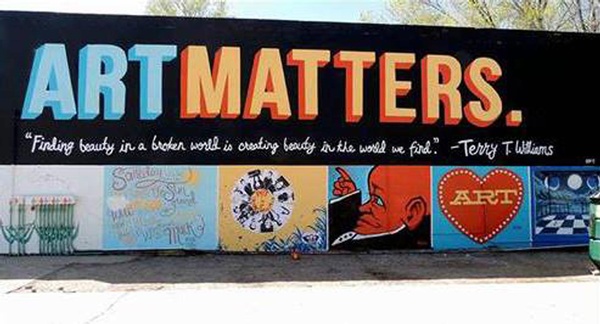
Turns out the local art community contributes more than just giving us intriguing images and performances to enjoy. According to a recently released study, “Arts and Economic Prosperity 5,” $18.4 million was generated in Durango by local arts, cultural organizations and audiences in 2015. The study, which was commissioned by Americans for the Arts, a nonprofit Washington, D.C., arts advocacy group, also suggests that Durango’s art industry is enough to support 602 full-time workers and generate $1.5 million in local and state taxes.
“The study provides definitive evidence that whether serving the local community or out-of-town visitors, a vibrant arts and culture industry helps local businesses and the City of Durango thrive,” stated a news release from the Durango Arts Center, which participated in the study. The DAC partnered with the City of Durango, Community Concert Hall at Fort Lewis College, Durango STEAM Park and Durango Choral Society to fund the report. Out of 34 eligible local organizations, 26 participated in the study.
The study seeks to show that “the arts are an investment that delivers both community well-being and economic vitality,” Americans for the Arts CEO Robert L. Lynch writes. Nationwide, the arts generated $166.3 billion according to Americans for the Arts. What’s more, compared to similar towns with populations less than 50,000, Durango raised three times more than the average.
In the conclusion of the report, the authors broke down the local spending: $8.6 million was spent by non-profit arts and cultural organizations in 2015 to employ people, buy goods and services from local establishments, and attract tourists. Another $9.5 million was spent by cultural organizations in the form of restaurants, hotels, retail shopping and other local businesses. Spending from out of towners was a key part of this $18.1 million, with visitors spending an average of $68.30 per event versus the $20.48 from a local.
This was the fifth report performed by Americans for the Arts. The 2015 report collected data from 14,430 organizations from across the country.
Expo to address mining pollution
On the heels of a visit from EPA Chief Scott Pruitt and other Colorado dignitaries, Silverton-based Mountain Studies Institute is hosting a three-day event aimed at finding new solutions to an age-old problem.
The inaugural Silverton Innovation Expo, scheduled for Aug. 14-16, will focus on finding creative, new solutions to the area’s toxic mining legacy. The Expo will bring together industry representatives, government agencies, scientists, nonprofits and residents for expert presentations, networking, discussions and field tours of active reclamation sites.
While a range of stakeholders have been working to solve the issues of acid drainage of orphaned mines over the years, most efforts have been piecemeal, explained MSI Executive Director Marcie Demmy Bidwell. The Expo’s goal is to coordinate an overarching approach to the problem. “The need to address abandoned and draining mines is a highly complex social and environmental problem that demands an integrated, holistic approach – one that combines innovations across the system,” Demmy Bidwell said. “We need to shift from go-it-alone mentalities of isolated improvements to one that recognizes the advantage of collaboration.”
The Expo aims to create a path forward that incorporates the newest technology, business perspectives, policy reform and other disciplines, she said. “The ultimate goal is to create sound solutions that are viable for business and adaptable for agencies and landowners,” she said.
In addition to MSI, the Expo is sponsored by the Animas River Stakeholders Group, Colorado School of Mines, EPA, Town of Silverton, San Juan County and others. The event will take place at the Silverton School Performing Arts Center and is free and open to the public. For a full schedule of events or to register, go to www.mountainstudies.org/expo.