
Quick and Dirty
EPA releases final metals analysis
Aluminum and iron were the metals most in abundance in the Gold King Mine spill, according to the Environmental Protection Agency’s latest and final report on water quality.
The report was released Fri., Jan. 6, and focuses on pre-existing river conditions, the movement of metals related to the release and the effects of the release on water quality, according to the EPA. The study also confirmed earlier reports that contaminant moved through the river system rather quickly to Lake Powell and water quality in affected rivers has returned to pre-spill levels.
“This report is a comprehensive analysis of the effects on water quality from the Gold King Mine release,” EPA Science Advisor Thomas Burke said. “While data indicate that water quality has returned to pre-event conditions, EPA is committed to continue our work.”
Of course, “pre-event” conditions is a subjective term. Waterways in the area have been subject to decades of acid drainage from around Silverton. According to the report, the total amount of metals released form the Gold King spill – which lasted about nine hours on Aug. 5, 2015 – was the equivalent of four to seven days of typical acid mine drainage from the mine, or one to two days during high spring runoff. However, the concentrations of some metals in the plume were higher than historical averages. But, as the yellow plume moved downstream, metal concentrations decreased via dilution and settlement into the river bed.
There were no reported fish kills in the affected rivers, and post-release surveys by various organizations have found other aquatic life did not appear to suffer any short-term effects. Metals in well-water samples collected after the spill did not exceed federal drinking water standards, and public water systems using Lake Powell for drinking water have not reported an exceedance of metals.
This is not to say there were not exceedances, however. In the nine-month period after the spill, particularly during the spring 2016 run-off, levels for some metals were found to exceed state and tribal standards. Other exceedances may reflect metals from other mines in the region and natural levels of metal in soils and rocks.
The EPA said it will continue to work with states and tribes to interpret and respond these findings. Download the final report at cfpub.epa.gov/si/si_public_file_download.cfm?p _download_id=530074.
Digging up dirt on the dinosaurs
Forget intergalactic beings, next week, Durango will be overrun with the giants of the Jurassic. Fort Lewis College, in conjunction with Rocky Mountain PBS will be presenting the new film “Dinosaurs” from 7 – 9 p.m., Wed., Jan. 18, in the FLC Student Ballroom.
The film is part of RMPBS’ popular, Emmy Award-winning “Colorado Experiences” series, which explores the people, places and events that have shaped Colorado.
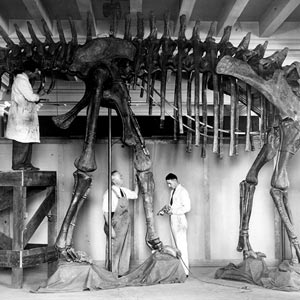 During the Jurassic era some 65 million years ago, Colorado was a “Dinosaur Highway” and today, scientists predict that the greatest finds are yet to come. In the mid-1800s, fossil remnants set the stage for the infamous “Bone Wars,” and the film traces the bitter competition between early paleontologists Othniel Marsh and Edward Cope. The two Easterners became as much a part of the “Old West” as the Oregon Trail or the gunfight at the OK Corral. Their rivalry spurred fossil collecting in Colorado but also brought embarrassment to other scientists who were more quietly pursuing their profession.
“Throughout Southwest Colorado, we see the outcrops of the famous dinosaur-rich Morrison Formation featured in the film,” FLC paleontologist Jon Powell said. “Although we haven’t found truly remarkable sites like those at Can?on City, Delta or the Purgatoire River, we have found dinosaur remains that promise the hope of a major discovery. We have even found some fragmentary bones within 2 miles of downtown Durango.”
The film will be followed by a panel discussion featuring filmmaker Marial Rodriguez-McGill; Colorado Film Commissioner Donald Zuckerman; former State Historian and host of “Colorado Experience” William Convery; FLC professors Jon Powell and Gary Gianniny; as well as FLC Geoscience students and representatives from the Animas Museum and Powerhouse Science Center.
In conjunction with the film, a number of other activities will be held throughout Durango:
- All month the Durango Library will host a display on dinosaurs and Colorado paleontology and geology. There will also be a dinosaur-themed Family Storytime at 10:30 a.m. Thurs., Jan. 19.
- An FLC student dinosaur fossil exhibit will be on display in the Delaney Library at the Center of Southwest Studies Monday through Friday from 10 a.m. - 4 p.m.
- The Powerhouse Science Center will host a special Dinosaur Pub Science night on Fri., Jan. 20.
- Sat., Jan 21, the Powerhouse will host a “Dinosaur Family Afternoon,” with activities and a rescreening of the film.
For more info., visit rmpbs.org/coloradoexperience.