
Quick and Dirty
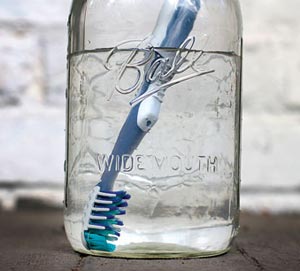
Fluoride bubbles to surface Jan. 30
To fluoridate or not fluoridate? The contentious issue may finally be laid to rest by local voters this spring.
The Durango City Council will decide at its Feb. 7 meeting whether or not to include a yay or nay fluoride ques- tion on the city’s April ballot. Ahead of the decision, a public meeting will be held to weigh the pros and cons of the issue starting at 5 p.m. Mon., Jan. 30, at City Hall, 949 E. 2nd Ave.
The battle over whether or not the City should continue adding the mineral of its water supply has brewed for years. Opponents argue that at its least, fluoride is ineffectual and unnecessary; at its worst, can lead to harm- ful health effects and lower IQs in children. On the other side, proponents argue there is no scientific evidence to support claims of fluoride’s deleterious effects and it is a key tool in the frontlines of defense against tooth decay, especially among lower-income families.
The effort to petition the City Council to either make a decision on the issue or put it on the ballot was spear- headed last November by local chiropractor Jim Forleo. He, and a group of opponents called “Clean Water Durango” gathered the requisite 593 signatures by the 30-day dead- line on Jan 9.
In June 2016, City Council voted to continue adding fluoride to city water.
Although it the practice started in the early 1900s, today, the amount of fluoride deemed safe and beneficial by the U.S. Public Health Services has been reduced. In some cities, such as Olathe, Snowmass, Montrose, Santa Fe, Pagosa Springs and Albuquerque, the practice has stopped completely, according to the Fluoride Action Network.
Liane Jollon, executive director of San Juan Basin Health Department, and John Ballew, chair of the Utilities Commission, are two local figures in favor of continuing the practice. According to Jollon, 70 years’ worth of scientific data shows the practice to be not just safe, but a benefit to the community – particularly the most vulnerable populations.
“I have found that the weight of science is in favor of water fluoridation,” said Ballew, whose commission was split on the practice. However, he also said the split wasn’t about whether or not adding fluoride prevents cavities, but whether or not it was the role of the city to add it in the first place.
There is a chance councilors could vote outright Feb. 7 to enact an ordinance banning fluoride, but that seems unkely. Whatever the outcome, City Utilities Director Steve Salka said it will be impossible to get rid of it entirely – fluoride occurs naturally in the city’s water.
Next Monday’s meeting will be aired live on Durango Government Television, Charter Cable channel 981 or 191, over-the-air on channel 10.1, or online at www.durango gov.org/DGOV.
Gymnastics moves into new digs
The sole remaining tenants of the Mason Center are moving out. Durango Gymnastics is moving to its new home in Bodo Park, and will be hosting a grand opening from 1:30 – 3:30 p.m. Mon., Jan. 30 at 144 Bodo Drive.
The site, located behind the Super 8, is the former home of The Turf and has more than 9,000 square feet of space.
The city bought the property for $1.4 million in late 2015 and spent another $1 million on renovations. The project was funded by the Parks and Recreation half-cent sales tax that was first approved in 1999 and residents voted to renew for another 20 years in April 2015.
The city hired consultants in 2015 to take stock of its facilities. One of the recommendations was to demolish the former elementary school and look for other gymnastics facilities. The cost of renovating the Mason Center was tagged at $12 million.
Sales, lodgers taxes see gains in ’16
Things are looking up in Durango, at least economically. The City of Durango released its final sales and lodgers tax numbers for 2016, with sales tax up 2.7 percent over 2015 and lodgers tax showing gains of 7.5 percent over the previous year. The latest numbers make 2016 the sixth year in a row of gains in sales and lodgers tax, according to the Durango Area Tourism Office.
Although statewide numbers are not yet available for 2016, numbers from 2015 paint a similar upward tourism trend across Colorado. According to the Colorado Tourism Board, visitors in 2015 generated more than $19.1 billion in direct spending and a record-setting $1.13 billion in state and local taxes in 2015, a 7.8 percent increase over the previous year.
Looking ahead to 2017, local tourism professionals are focusing on improving shoulder season business, according to DATO Director Bob Kunkel.
DATO also announced the addition of two staffers: Sales Manager Julianne Fredrick and Public Relations Consultant Theresa Blake, of Treehouse Communications.
– Missy Votel