
Saving Durango's heart and soul
City forum addresses lack of housing for working class
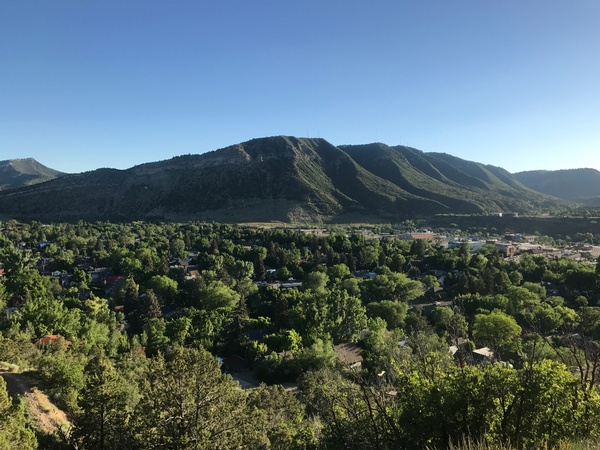
More infill downtown on "The Grid" is just one of the many ways the City of Durango is proposing to fight the shortage of affordable workforce housing./File photo
Durango’s lack of affordable housing is coming to the fore again. But this time, the City of Durango has a plan: adding 1,000 long-term affordable housing units by the year 2040.
The plan is the result of a two-year project by the City’s Community Development Department to evaluate and address local housing issues. The plan, and its proposals, will be up for public review at an open house next Mon., Oct. 30, from 5 – 6:30 p.m. at the Durango Recreation Center. Although attendees can drop in at any time, city staff will make a short presentation on the plan at 5:30 p.m. The remainder of the time will be used to gather residents’ input on the new plan.
To reach its 1,000-unit goal, the city has proposed a number of strategies including: easing development regulations; prioritizing density and infill development; and establishing a permanent housing trust and land-banking program.
“As the people who make Durango work – teachers, waiters, first responders, young families – find it increasingly difficult to afford housing, the town is in danger of losing its identity,” reads the plan’s opening statement. “Prices will continue to escalate, and are likely to continue to accelerate, with significant implications.”
Among the implications are difficulties with workforce retention; lack of worker diversity; sprawl; flight of young families and first-time home buyers; fewer children in Durango schools; less sales tax; and less discretionary income for those who stay.
According to the 2015 La Plata County Housing Demand Study, 40 percent of Durango residents are housing burdened – aka they spend more than a third of their income on housing. Housing costs have been on the rise for decades, with Durango having the fifth- highest housing-price-to-income-ratio in the state, after Boulder, Steamboat, Vail and Carbondale. The median home price for an in-town home in Durango is currently $436,500 according to the Durango Area Association of Realtors – more than 7 times the average income.
The story is not much better with rents. Durango posted the fourth-highest rents in the state in 2016, and more than half of the city’s renters qualify as cost burdened.
According to city calculations, Durango will need 185 - 260 units annually to meet demand. However, the city averaged only 134 units a year from 1995-2015. Currently there are 435 housing units in the City with permanent or long-term affordability, equal to about 6.5 percent of Durango’s total housing stock. Based on other cities and towns with successful affordable housing programs, this number should be closer to nine percent, which is how the City arrived at the 1,000 mark.
It is worth noting that the plan is not intended to address homelessness, habitability or senior housing. Homelessness is the focus of a separate initiative. Habitability – the concept that every dwelling should be maintained to a minimum standard – was previously examined by the City without success.
Although the City has taken steps to address affordable housing, including the formation of the Regional Housing Alliance (now part of the Homes Fund) and the adoption of the
Fair Share Ordinance in 2009, the new housing plan will take it several steps further by proposing a combination of approaches.
One of the most promising tools is land banking, where a government, nonprofit or private partner buys land or acquires it through annexation to hold for future housing. An advantage of land banking is that as the cost of land rises, banked land can be made available to developers at no or reduced cost. The biggest hurdle to establishing a land bank is raising capital, which is why the plan is calling for developing a housing trust fund in tandem. The city is also exploring using funds collected through its Fair Share inclusionary housing ordinance to also fund the land bank.
Another funding tool being considered is voluntary transfer fees such as the one in place at Three Springs. Under the optional program, a half-percent fee is assessed on every real estate transaction, excluding initial sales of new houses. Over the next 40 years, this fee is expected to generate more than $25 million for housing programs.
An important difference between transfer fees and the Fair Share model is that under Fair Share, developers pays a one-time fee. With a transfer fee, the City collects less money up front, but collects every time a property is sold. The transfer fee also removes the burden of an additional expense for developers.
In addition to funding mechanisms, the plan also highlights the most suitable areas for future growth or re-development, such as North Main, the old Rocket Drive-In area, Florida Road, Three Springs and Twin Buttes. The latter two are approved for more than 2,000 additional housing units, and Three Springs is the primary source of new attainable housing in Durango.
In all, the situation in Durango is not all bad, though, concludes the plan. “There are many examples ... of communities where the working class and even professionals have no chance to own market rate housing,” it states. “This is not an imminent threat in Durango, but people should also have access to reasonably priced, quality housing.”
After the public discussion, a time table for implementation of the plan will be brought to City Council for approval.
To read a copy of the plan, go to www.durangogov.org/index.aspx?NID=877. For questions, contact Mark Williams at (970) 375-4854 or mark.williams@durangogov.org.