
Strength in numbers
New giving circle turns small donations into big impact for local environmental groups
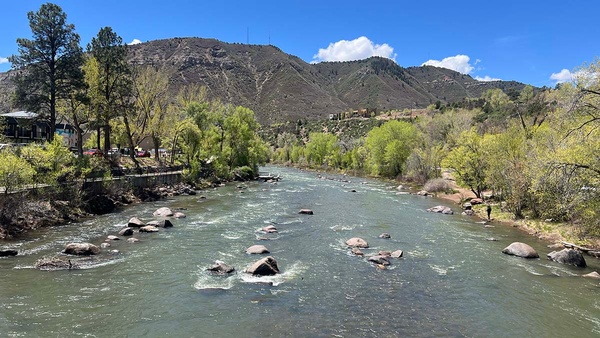
Local riparian habitat, such as the Animas River, will benefit from the latest round of funding from Durango's newest giving circle, 100+ for the Earth. The group meets April 15 to allocate its next round of funding./ Telegraph file photo
If this upcoming Earth Day has you feeling a little hopeless or helpless given the current state of environmental affairs, take heart. Next week in Durango, a newlt formed group of Earth-conscious residents will gather, not just to commiserate on the problems but pool their power to offer solutions.
Calling itself 100+ for the Earth, the group – known as a giving circle – practices a form of philanthropy likely as old as humanity itself: combining resources, making collective decisions and supporting shared values. But the giving circle’s modern iteration is quietly reshaping how communities think about generosity and impact.
The basic premise is simple. Members contribute a set amount of money at regular intervals, nominate nonprofits they care about and then vote on where the funds should go. It’s democratic, efficient and, perhaps most importantly, grassroots.
“There’s strength in numbers,” Gale Zander Barlow, one of the founders of 100+ for the Earth, Durango’s newest giving circle, said. “You get a whole bunch of people together, you hope for 100 plus. And each person donates $100 at each meeting, and usually they do quarterly. So technically speaking, if we have our 100-plus, every year, we’re giving away $40,000.”
The model itself has grown rapidly since its modern revival in 2006, when the first formal giving circle launched in Michigan. Since then, the movement has expanded into a global phenomenon, with the United States home to roughly 4,000 giving circles with an estimated 370,000 members. Collectively, these groups gave away $3.1 billion from 2017-23, according to a report by Philanthropy Together, the Dorothy A. Johnson Center for Philanthropy and Colmena-Consulting.
And they don’t appear to be going anywhere. Between 2006-16, giving circles in the United States tripled in number, then tripled again by 2023. The number is expected to double again in the next five years.
“A lot of people just don’t know about giving circles or how they work,” Zander Barlow said. “So just the education piece is really significant.”
Colorado now hosts 16 chapters within the 100 Who Care Alliance network, including three in Southwest Colorado, including the women-led 100+ Women Who Care La Plata, founded in 2019, to the more recent Guys Who Give 4 Corners, which started in 2024.
The newest addition, 100+ for the Earth, sets itself apart in a few key ways, according to Zander Barlow. For one, it’s open to anyone, including students who can join for just $10 per meeting. The group also focuses exclusively on environmental nonprofits in Southwest Colorado, a reflection of its founders’ shared passion for climate and conservation work.
Barlow traces the group’s origins back to a local climate study group she helped start after moving to Durango nearly nine years ago. Before that, she lived in Los Alamos, N.M., where she worked on climate policy with the League of Women Voters. But it was a growing awareness of a gap in philanthropic funding that ultimately inspired action.
“I started reading about two, three years ago, that people were saying that the philanthropy world needed to start pitching in some money to make a difference with climate,” Zander Barlow said. “Less than around 2% of donation dollars were going to environmental and climate-related nonprofits. Now, it’s up to 3%, but still it’s only 3% going to try to make sure that we have a home to live in.”
The giving circle became a way to address that imbalance locally. With the help of fellow organizers Carrie Denman, the group took shape, holding its first meetings and building momentum last fall.
So how does it actually work?
The structure is straightforward but carefully organized, Zander Barlow said. Members gather quarterly, each contributing $100 per meeting (plus a small administrative fee that goes to the Community Foundation Serving Southwest Colorado, which manages the funds). Non-members are also welcome to attend and contribute if they wish.
At each meeting, three members’ names are pulled from a hat, and those members are invited to speak on the environmental nonprofit they would like to nominate. Each speaker gets five minutes to pitch their organization followed by a brief Q&A session. Then, after all three presentations, the group votes.
“It’s very businesslike,” Barlow said. “We keep it timed. Everyone gets five minutes, no more, no less.”
(This isn’t to say that before the formalities begin, there’s time to mingle. Zander Barlow said time is set aside beforehand for members to socialize and catch up.)
So far, the group has held two meetings, one last fall and one in January. The third is planned for next Wed., April 15, from 6-7 p.m. at 11th Street Station. At its last meeting, the group voted in a tie to fund both the Sierra Club’s upcoming Beaver Festival and the San Juan Mountains Association, resulting in the pot – roughly about $4,000 – split between the two.
Zander Barlow said the group has still not hit its 100-member mark, but as numbers grow, so too will the size of the donations. Beyond the dollars, however, giving circle adherents emphasize the educational and civic benefits of participation. Studies show that 59% of giving circle participants become more civically engaged, while 91% report an increased sense of belonging. Many also say they feel more confident in their understanding of social issues.
There are plans to expand that educational reach even further. The group hopes to partner with Fort Lewis College in the future to host a student-focused pitch night, encouraging younger participants to get involved.
For now, the focus remains on building momentum, growing membership, raising awareness and continuing to support local environmental efforts in a meaningful way.
Zander Barlow encouraged anyone who may be giving-circle curious to stop by next Wednesday. “Please come and find out how fun it is to participate in a giving circle,” she said. ■