
Stuck in the middle
In Durango, employers struggle to fill mid-level positions
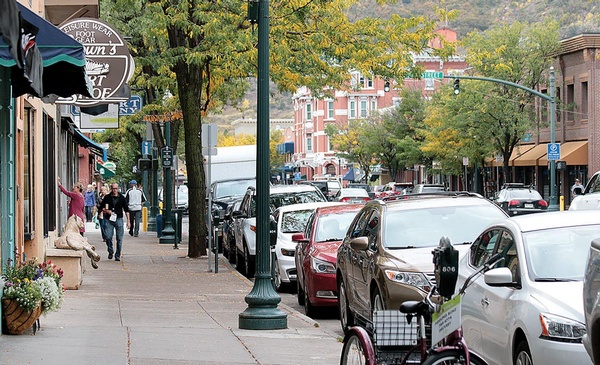
According to the Colorado Department of Labor and Employment, the unemployment rate in La Plata County is just 2.9 percent. Its neighboring counties differ with San Juan at 2.4 percent, Archuleta at 3.1 and Montezuma at 4.5 percent. The nation is at 5 percent unemployment./Photo by Jennaye Derge
Some things are hard to find in Durango – an affordable one-bedroom apartment, a house downtown under $500,000 or a likeable candidate for president. It turns out, it’s just as difficult to find mid-level workers here.
Roger Zalneraitis, executive director for the La Plata County Economic Development Alliance, said Durango is full of entry-level employees and even high-level management. It’s those mid-level positions businesses are struggling to fill.
The mid-level professional is someone who’s typically been on the job for several years, maybe even a decade. They’ve proven themselves on the job, developed their skills and are likely looking for greater leadership roles.
The struggle to find those employees isn’t specific to any profession. The mid-level, help wanted slot is open in every industry, Zalneraitis said. And, the unemployment rate in La Plata County is just 2.9 percent, according to the Colorado Department of Labor and Employment.
In an effort to fill the gap, the La Plata County Economic Development Alliance created MoveToDurangoCo.com, a website aimed at attracting talent from outside the Southwest and helping professionals relocate.
When the idea to create a website for that specific purpose was first proposed, Zalneraitis said he wasn’t convinced. Even though his colleagues were.
Instead he felt the La Plata County Economic Development Alliance’s top three priorities – to assist existing businesses,
new businesses and attract talent to the area – could be achieved using just the alliance’s already existing website, yeslpc.com.
Then came their annual Economic Summit in 2015. Last year’s keynote speaker spent time talking about this very issue and, in the end, Zalneraitis changed his mind. Efforts to develop “Move to Durango” hit high gear and the website came online this June.
So far, the alliance has had a few inquiries, which he considers a good number for the first couple months.
The focus of MoveToDurangoCo.com is on the Durango lifestyle – the first thing people consider when making the decision to move, Zalneraitis said.
Their tagline is “Be Extra Happy Here,” with the emphasis on extra. The website touts 300 miles of trails, a ski area, gold medal fishing, national parks, and several other points called “Cause for Happiness.” By comparing Durango to other cities and communities, the site markets the city’s clean air, sunny days, snow-capped mountains and friendly atmosphere.
“It’s a very beautiful town,” Zalneraitis said. “But, it’s an expensive one.”
The challenge with enticing new employees to come to Durango are the same ones Durangoans face – a high cost of living and competitive housing market.
It’s a concern for community leaders and one of Durango’s top challenges.
The city’s Community Development Department is currently working on a housing program, doing what it can to address the lack of affordable housing in the area.
“Anytime you have the planning department working at how to make housing more affordable – that’s a good thing,” Zalneraitis said.
According to the Regional Housing Alliance in La Plata County, housing should only take up 30 percent of a household budget. It’s getting harder and harder, however, for residents to stick to that number.
In the RHA’s recent Progress Report for the La Plata Homes Fund, it calculated someone earning minimum wage in Durango would have to work 96 hours a week to pay the rent for a 1-bedroom apartment.
“The rental market in Durango is extremely tight,” the report reads, “with a vacancy rate of 1 percent and rents that have increased 36 percent since 2011.”
The answer for some has been to live in nearby towns, like Bayfield or Ignacio. According to the RHA’s Housing Demand Forecast, 60 percent of the Durango workforce doesn’t actually live in Durango. As the cost of commuting continues to go up, including fuel prices and maintenance, things will likely shift.
Zalneraitis said if the high cost of living in Durango isn’t the No. 1 obstacle, it’s a close second to infrastructure.
As an example, he explained how infrastructure costs can increase home prices.
Land wasn’t always expensive in the area, he said. In the early 1990s, the price of land was cheap. Back then, a developer could take on the additional expense of building water and sewer lines, or even roads, in a new development. Today, land is no longer cheap.
With the additional costs of building infrastructure – like water, sewer and roads – home prices are getting out of reach for the average mid-level worker.
“There’s only so many costs you can pile on … something’s got to give,” he explained.
For the past several years, home bills have also been going up. Water, sewer, electricity, trash and more continue to rise.
As these costs continue to rise, so does the cost of living and the cost of moving to Durango. The question that remains to be seen, is whether people will continue to be willing to pay.
Want to know more? Check it out at movetodurangoco.com