
The root of the matter
As Durango debates future of organic parks, program grows local roots in NYC

Reid Ruecker, 8, and his sister Lili, 6, ran around the grass at Needham Elementary School recently. Needham is one of the parks the city is considering taking out of the Organically Managed Lands Program./ Photo by Jennaye Derge
The announcement was unexpected. When word came that Durango officials recommended trimming the organic parks program from eight parks down to two, many people were stunned.
About 50 residents attended the next City Council meeting to voice concerns, share frustrations and ask the city to reconsider.
At the same time, one of the program’s advocates, who helped to craft the official ordinance in 2012, was planning for a trip to New York City.
Katrina Blair, founder of Turtle Lake Refuge, had been invited by the NYC Parks and Rec Department to talk about the benefits and science behind organic management. The city wants to teach staff how to apply those techniques to one of the world’s largest urban park systems.
And, they’re not the only ones looking for a change.
Officials from Cleveland invited Blair for a similar visit next spring. Also, the Bee Happy Lands project, an organic land care business offered by Turtle Lake, has been hired to manage lands at Electra Lake and, most recently, Telluride. “It’s a bigger movement,” Blair said.
The movement in Durango really started in 1998 with the Dandelion Brigade, a group of locals who volunteered to take the pesky perennials from Durango’s front yards and turn them into lunch.
Their efforts eventually morphed into the annual Dandelion Festival, the organic parks campaign and the Bee Happy Lands project. So, what began as a lawn-by-lawn effort in Durango has now
made its way, community-by-community, across the nation. “It feels like the best intention of how we can be good caretakers of this earth,” Blair said. The organic parks program began in earnest in 2012 when the city created the Organically Managed Lands Program. At first, it included nine parks, or about one- third of Durango’s park system.
The city hired a professional consultant, Chip Osborne, founder and president of Osborne Organics based in Marblehead, Mass. With more than a decade of experience in the field, Osborne helped the city develop a plan to manage these nine parks organically.
One thing he made clear in the beginning was that the process was going to take time and money.
First, it would take time for the soil, plants and ecosystem of each park to relearn how to be a healthy, wild ecosystem and exist without the biannual spraying of herbicides. Financially, this meant it would cost more to initiate the process but, eventually, the grasses and other plants would need less help, and maintenance would be less expensive.
In the first year, the Riverview Sports Complex was taken out of the program “at the request of community members,” according to Parks and Recreation Director Cathy Metz.
The high-impact, heavy use of the park made it difficult for the organic management processes to get established. The other eight parks Brookside, Fanto, Folsom, Need- ham, Pioneer, Riverfront, Iris and Schneider remained in the program.
During the budget process for 2015, city officials considered taking additional parks out of the program. In the end, however, they kept all eight in.
Then again during budget discussions, this time for 2017, the city’s Parks and Recreation Director recommended removing six of the parks from the program keeping only Pioneer and Schneider.
The two key reasons for this, according to Metz, were performance and funding. It would cost $22,545 more to manage the parks using organic methods than it would using conventional ones. As for performance, some of the athletic fields in parks like Fanto and Needham were struggling. “The organic pro- gram cannot keep up with that higher use,” Metz said.
In other parks, the coverage area for weeds, which includes dandelion, clover and plantain, was exceeding the city’s allowable percentages.
The announcement in mid-October of possible cuts to the program was a surprise to its supporters, and about 50 of them attended the following City Council meeting Oct. 18.
Many of the speakers talked about the key tenets of the organic program replacing herbicides with natural, healthy ecosystems and a desire to protect the community, the watershed and the environment.
The issue was addressed again during the City Council’s most recent meeting Tues., Nov. 1. Many of the same speakers attended, as well as the five council members and Metz.
Some of the same frustrations were expressed, and at the end of the public comment session, Durango Mayor Christina Rinderle told the audience, “We care about our people, I want to make that very clear. We’re a part of the community, we’re not separated from it.”
She also told them a majority of the council supports the organic parks program.
“We’re still negotiating; we’re still making our way,” added Councilor Dick White.
During the meeting, Metz presented the council with a new option to consider. This one would keep five out of the eight parks in the organically managed program and remove three: Fanto, Needham and Folsom.
Metz explained those three have a lot of heavy use from the city’s Parks and Rec athletic programs, like soccer, baseball and lacrosse.
“This is one of those things where people have strong opinions,” Metz said in an earlier interview. “We understand and respect those different opinions and are trying to find a balance to meet the needs of the community as a whole.”
Decisions for funding in the 2017 budget reflect the council’s priorities, according to City Manager Ron Leblanc. Those decisions will be made and priorities revealed when the council reconciles the budget Mon., Nov. 7.
“There is a path,” Blair said. “It doesn’t have to be a battle.”
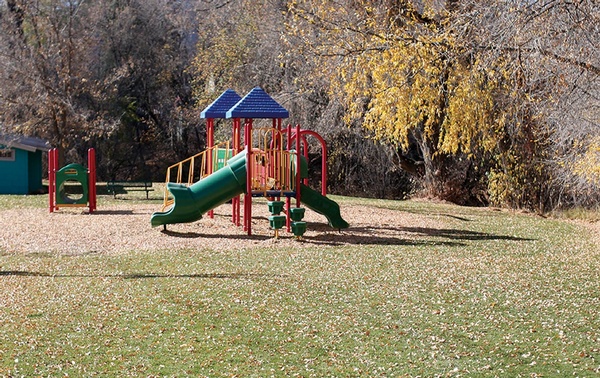
Durango's Brookside Park, which is managed organically. NYC Parks and Rec Department used Brookside on the cover of a pamphlet to staff about organic strategies and promoting a visit by local organic parks advocate Katrina Blair /Photo by Jennaye Derge