
Uncharted waters
Citizen group looks to keep locals in the Superfund loop
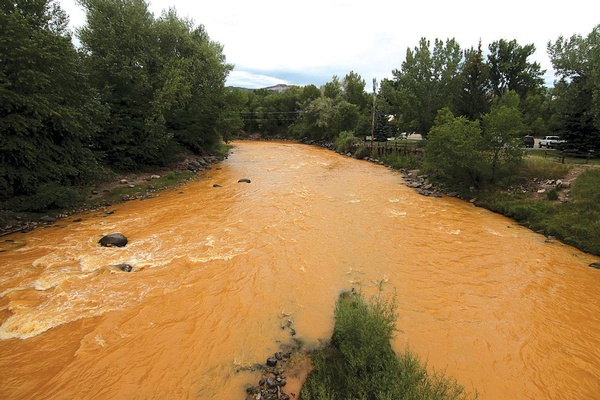
By now, everyone has heard the tale of the EPA subcontractor who unintentionally triggered a spill at the Gold King Mine site on Aug. 5, 2015, unleashing millions of gallons of toxic mine waste into the Animas River, pictured above. What residents might not have heard is why many of the mines are abandoned, who's responsible for cleaning them up or how they can get involved. In an effort to address those questions and en- gage the community, a citizen-led group has been created called the Citizens Superfund Workgroup./File photo
There’s more than one way to get involved. For some, sitting through a government meeting or commenting on a lengthy federal document just doesn’t work.
“We understand it’s not always possible to engage in the EPA’s process ... we wanted to provide another opportunity,” explained Ann Oliver, coordinator for the Animas River Partnership and key member of a newly created, citizen-led effort to stay involved with the EPA’s Superfund site outside Silverton.
By now, everyone has heard the tale of the EPA subcontractor who unintentionally triggered a spill at the Gold King Mine site on Aug. 5, 2015, unleashing millions of gallons of toxic mine waste into the Animas River. Everyone has seen the images of a bright orange waterway running through Durango, and heard about the Superfund.
What residents might not have heard is why many of these mines are abandoned, who’s responsible for cleaning them up or why someone hasn’t done it already. They might not know some areas of the Animas were lifeless even before the spill, or what impact the mines have on the entire Animas watershed.
In an effort to address those issues and more, the Animas River Partnership, Animas River Stakeholders Group, Trout Unlimited and the Animas River Community Forum have come together to create the Citizens Superfund Workgroup.
This newly organized group is hosting several public meetings – the first of which will be from 6-8 p.m. Wed., Aug. 23, at the La Plata County offices on E. 2nd Avenue – to discuss the key issues of the Superfund site, called the Bonita Peak Mining District. The meetings will cover the history of the region, modern policy and regulatory issues, water quality, aquatic life, and the overall health of the Animas River.
These meetings are not meant to replace or subvert the EPA’s efforts. The group wants to help people understand the issue, which is often described as complex and vast, and initiate dialogue.
They’ll begin by decoding the issue through informative discussions, and then come together to craft a set of suggestions for the EPA officials charged with cleaning up the mining messes.
Although the workgroup’s members have hailed the EPA’s efforts so far and said they’ve been responsive to the community, it is still a local issue.
With millions and millions of taxpayer dollars likely to be spent on cleanup efforts over the next 15-20 years, some felt it was important to stay informed and involved.
In the end, Shannon Manfredi, coordinator for the Animas River Community Forum, said, it comes down to one question, “What do you hope to be different after 20 years of this Superfund?”
The public meetings take place once a month over the next several months with time off over the holidays. Each one addresses a specific facet of the Bonita Peak Mining District and the abandoned mines littering the region. The first meeting is about the history of mining, how it has impacted water quality over the years and what’s been done about it so far.
For example, different types of metals flow into the Animas watershed in different concentrations. Some are problematic, others are not. Some flow from abandoned mines, and others occur naturally.
Peter Butler, of the Animas River Stakeholders Group, plans to break down the issue and start the discussions.
He’s not only been with the ARSG – whose mission is to clean up the damage from abandoned mines and improve water quality in the Upper Animas – since its inception in 1994, he’s also chaired water-quality commissions charged with setting the standards.
In the meeting, he’ll have a PowerPoint presentation with key information, but it’s not going to be a class. The idea is to have dialogue. “We’re looking at listening, working and talking together,” he said. The second meeting, scheduled for the morning of Sat., Sept. 9, is a field trip to the Superfund site. The group will visit key locations in the Bonita Peak Mining District, including the Gladstone area, which is considered the greatest contributor to metal-loading in the river; the Gold King Mine; the EPA’s interim water treatment plant next to the Gold King mine; and other mine sites.
“We talk a lot about it, but don’t have the picture in our minds,” Oliver said. “It just helps to put names to places.”
The next couple meetings are where Oliver’s expertise come in. As the coordinator for the Animas River Partnership, she brings to the table an understanding of the entire Animas watershed and the regulatory processes overseeing it.
The October meeting will focus on policy, regulation and legal roadblocks. Whether its playing by the EPA’s rules for Superfund cleanup, taking into account the affects laws like the 1872 General Mining Act still have, or overcoming the hurdles to passing Good Samaritan legislation in today’s congressional climate, the legal and regulatory processes often dictate how mine cleanup in the West moves forward – or doesn’t.
The next meeting, which takes place after the holiday season, will be about conditions in the Animas River, including both past and present water quality and how it affects the aquatic life and environmental health of the river.
The last meeting on the schedule is in February. After having the chance to talk about some of the progress made, challenges faced and issues at hand, the workgroup will turn its eye toward the future, putting together a set of goals.
Those goals will include objectives for the Superfund and ideas for measuring its success. The group plans to present those goals to the EPA for consideration.
There’s no specific path laid out once the ideas are handed over. “If there’s a lot of interest or a need to continue on, we just might,” Manfredi said.
The point right now is to start the conversation; it’s uncertain where it might take everyone.
The one thing that is certain is the process to clean up the abandoned mines leaking into the Animas watershed will take years, even decades. And, it will take millions of taxpayer dollars. No one wants to see that ultimate goal become over-grown or forgotten.