
User-friendly?
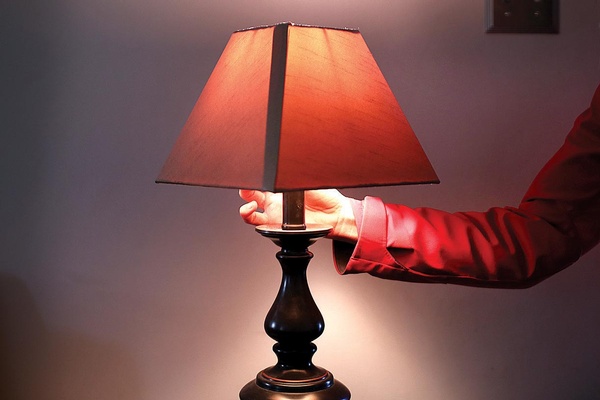
Along with an increase in the cost per kilowatt hour for off-peak use in La Plata Electric Association's Time-of- Use program, is an increase in the available off-peak hours. In 2016, half the day, or a total or 12 hours, were considered off-peak. Next year, it increases to 16 hours a day, Monday-Saturday./Photo by Jennaye Derge
Along with the announcement about changes to rates and times for La Plata Electric Association’s Time-of-Use program came hints about its future.
In a recent press release, Dan Harms, LPEA’s manager of rates, technology and energy policy, said “Ultimately, we believe LPEA will look to Time-of-Use rate struc- tures for our entire residential membership.”
The same sentiment was echoed by the coop’s CEO Mike Dreyspring in the latest edition of Colorado Country Life, a monthly magazine geared toward rural electric coop members, when he talked about LPEA’s future rate system.
“If I did have that crystal ball, I believe it would tell me that LPEA’s TOU program is the future for all of our residential members,” he wrote.
And, the prediction appears to be coming true.
“That is one of our long term objectives,” Harms explained in an interview Monday.
He said LPEA is considering the possibility of making the transition to using TOU rates for all members over the next four to five years. Moving along that timeframe, the TOU program would still be a voluntary option for members in 2017, much like it is now.
In 2018, however, things would change. Time-of-Use would be the norm, and members would need to opt out if they preferred one flat rate. Then, the coop could possibly make Time-of-Use the new standard.
Harms said nothing’s set in stone, but that’s where things are headed.
These comments came as LPEA announced changes to its Time-of-Use pro- gram for the coming year.
The base rate for the TOU program will go down slightly in 2017, from $21.50 to $20. The cost for power, which is charged per kilowatt hour, or kWh, will stay the same for off-peak use at 5.9 cents per kWh. The big change is with the on-peak charge. It jumps more than a third, from this year’s rate of 16.8 cents per kWh to 23 cents for next year.
Along with that increase, though, is an increase in the available off-peak hours. In 2016, half the day, or a total or 12 hours, were considered off-peak. Next year, it increases to 16 total hours.
Those changes are for Mondays through
Saturdays, with all day Sunday plus the Thanksgiving and Christmas holidays still considered off-peak.
According to Harms the No. 1 benefit of the Time-of-Use program is control. Members have control over how much money they save.
And, since an electric cooperative is member-owned, when members save money, LPEA also saves money.
One way the TOU program helps the coop keep costs lower is directly linked to facilities and infrastructure. The coop is required to build the facilities needed to accommodate maximum power usage. But, if power is used more evenly, then less infrastructure is needed and money can be saved.
For example, if LPEA had 1,000 customers and they all used power at the same time each day, then LPEA would need to build a system that could handle getting power to all 1,000 customers.
But, if 500 of those customers used power during the day and the other half used it in the evenings, LPEA would only have to build a system that could handle 500 customers. It could save construction, maintenance and other costs that come with maintaining a larger infrastructure and pass those savings onto members.
The TOU program, however, does have a limited shelf-life, according to Harms.
As more people sign onto the program and change their usage, patterns also change. Perhaps the evenings become the time when the most power is used, then it could be weekends or back to weekdays.
Tweaks can be made, though. Times and rates can be adjusted. “There’s a lot of flexibility on a program like that,” he added.
LPEA started the Time-of-Use program in the early 1990s. Back then, the program was strong, with about 5,000 members. Then in 2012, LPEA’s power provider Tri-State Generation and Transmission changed its rate structure for the power it sells to LPEA. The move essentially took away the coop’s ability to offer substantially different rates for different times, and the TOU program’s member- ship dropped to about 2,000.
LPEA spent the next several years working with Tri-State to get the program back to its former glory.
“It was a hard-fought battle on LPEA’s side,” Harms explained. “We don’t expect it to change.”
Harms said the Time-of-Use program isn’t something LPEA wants to force on people, but it is a better price signal for users. In other words, it’s a more direct link to usage and the price for wholesale power.
This year, Tri-State raised the cost of wholesale power 4.33 percent.
Harms said rather than raise rates for LPEA members, the coop found other ways to absorb the costs, like sensible maintenance decisions, refinancing loans and better use of technology, including the company’s new net metering system.
“There’s so many things we can do with efficiency,” he added.
The rates did go up for some of LPEA’s large industrial users, but small businesses and residential properties will not see an increase.
When it comes to the rate structure for the coming year, it’s actually not too late to put two cents in to the conversation, that is.
LPEA takes comments from its members and considers them in decision-making for 30 days after an announcement. For the 2017 rate structure, that means sometime in mid-December, but they’d really like to get all that feedback ahead of the next board meeting, which is scheduled for 9 a.m. Dec. 14 at the coop’s headquarters in Bodo Park.