
Venting Frustrations
Environmental groups file lawsuit over delay in methane rule
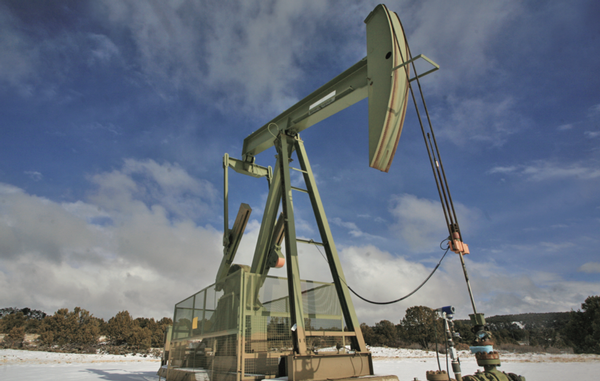
Flaring and venting of natural gas from rigs such as this are seen as a big contributor to the Four Corners' Methane Hot Spot. A 2016 BLM rule would've stopped the wasteful and unnecessary practice. However, the Trump Administration recently announced plans to delay the rule's implementation by at least a year. Environmental groups, including the San Juan Citizens Alliance, are suing to reinstate the rule./File photo
The Trump Administration continues to keep environmental groups and their legal teams busy. This Tuesday, more than a dozen organizations, including Durango’s San Juan Citizens Alliance, filed suit challenging the delay in implementing a rule that would dramatically slash methane emissions on BLM lands.
“Oil and gas companies are recklessly dumping high levels of methane into the atmosphere,” Michael Saul, a lawyer with the Center for Biological Diversity, said. “It’s not just wasteful and harmful to public health, but the Trump Administration is trying to let them get away with it. The lawsuit aims to hold the Trump Administration accountable and prevent it from illegally suspending modest requirements to limit this potent greenhouse gas.”
The so-called Methane and Waste Prevention Rule, which updated 30-year-old regulations that predated the modern fracking era, was passed in November 2016. It was aimed at reducing the waste of natural gas from flaring, venting, and leaks on public and Indian lands by requiring companies to fix leaky, faulty equipment. It was finalized under the Obama Administration after an extensive BLM review and public outreach process.
However, on Dec. 8 this year, Interior Secretary Ryan Zinke announced in federal court that he would delay implementation of the rule for one year.
Naturally, environmental groups and residents throughout the West have decried the delay. This fall, more than 175,000 people commented against a proposed delay of the rule. Opposition has been especially strong in the Four Corners, home to the massive methane Hot Spot.
The hot spot, which was first detected from space by NASA in 2014, is the largest concentration of methane in the United States, more than triple the standard ground-based estimate according to NASA and the University of Michigan. Covering more than 2,500 square miles, it has been directly linked to oil and gas production in the region. In addition to stopping excess releases of methane, a greenhouse gas 87 times more potent than carbon dioxide, the rule was also meant to stop other toxic pollutants that come in the oil and gas mix, including benzene, toluene, ethylbenzene, xylene and smog-forming volatile organic compounds.
The rule was also seen as a cost-saving measure. According to the U.S. Government Accountability Office, between 2009-15, enough natural gas was unnecessarily wasted and leaked to serve more than 6 million households for a year. The GAO estimates lost royalties from this wasted gas total nearly $23 million annually.
“The BLM proved that they’re not interested in the economic or physical health of the people they’re supposed to serve,” Emily Bowie, Campaign Organizer for the San Juan Citizens Alliance, said. “By circumventing this important protection, they’ve ensured that at least $182 million worth of New Mexico’s natural gas will be wasted into the atmosphere. This unnecessary wastefulness will cost the state $27 million in lost revenues and royalties that could have been saved for roads and schools,” she said, citing an Environmental Defense Fund report.
The groups also worry the delay is a slippery slope toward further weakening and repealing of the rule, all in an effort to appease Trump’s oil and gas donors.
"The delay flies in the face of over-whelming public support ... and, fundamentally, core precepts of federal law," Erik Schlenker-Goodrich, executive director of the Western Environmental Law Center, said. "Methane waste seriously and urgently threatens our climate, pocketbook and public health. If there was any doubt who Sec. Zinke serves in his position, it's now abundantly clear it's not the American public."
There have been three prior attempts to derail the rule. In January 2017, a federal judge in Wyoming denied a motion to enjoin the rule. In May 2017, the U.S. Senate voted to reject legislation to eliminate the rule.
And, in October 2017, a federal judge in California ruled that an attempt by the secretary to stay the rule’s compliance dates without notice or an opportunity for comment violated the law.
Other groups signing onto the lawsuit include the Center for Biological Diversity, Dine? Citizens Against Ruining Our Environment, Montana Environmental Information Center, National Wildlife Federation, WildEarth Guardians and the Wyoming Outdoor Council.
For more information on the Hot Spot or the rule, go to www.sanjuancitizens.org/ four-corners-methane-hotspot.