
LPEA talks nickels, dimes of local renewables
Workshop on Sept. 19 to focus on economics and financial impacts of renewables
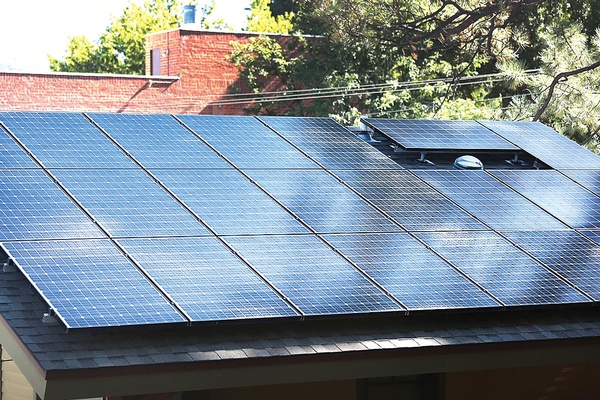
LPEA talks nickels, dimes of local renewables
As the local discussion over renewables heats up, La Plata Electric Association will host the third in a series of workshops meant to shed light on the topic. “Economics of Integrating Renewable/Distributed Generation” will take place at LPEA headquarters (45 Stewart St.) from 5:30 – 7:30 p.m. Tues., Sept. 19.
“For this third session, we will specifically focus on the ‘economics’ of installing renewable systems and the financial impacts to LPEA and our membership as a whole,” Dan Harms, manager of rates, technology and energy policy, said.
Harms, who will lead the workshop, also plans to include an explanation of net metering and infrastructure expenses that LPEA incurs as a result. “Balancing the recovery of expenses with the proper incentives for renewables can be challenging, and we will be taking a look at the numbers,” he said.
LPEA, like many utilities across the country, is being pressured by the public to increase its renewable offerings. Recently, San Juan Citizens Alliance, backed by Sierra Club and Local First, began circulating an online petition requesting the City of Durango to commit to using 100 percent locally generated renewable energy by 2050.
According to proponents, doing so would not only keep energy dollars local and create local jobs, but will protect the area’s air, land and water.
As businesses in your community, we ask City Council to commit to obtaining 100% of the City’s community-wide energy needs in addition to City Operations with renewables by 2050, with 80% of electricity generated locally by 2030. We will be there to support you on the path ahead to realize this energy future.
Other cities and towns also circulating such petition include Salt Lake City, Moab, Park City, Fort Collins, Boulder and Pueblo. Last year, 53 percent of Tri-State’s electricity came from coal, although 27 percent came from renewables, and more is coming on line all the time, according to Tri-State spokesman Lee Boughey. Seventy-five megawatts of wind generation from south-eastern Colorado will go on-line later this year and a major solar plant on the South-
ern Ute reservation has also been added. About 5 percent of Durango’s power comes from local renewable sources – the cap allowed under LPEA’s cap with Tri-State. A request from LPEA’s board to rework the co-op’s contract and extend the cap from 5 to 10 percent was denied last month and put off for another two years.
A so-called “white paper” from LPEA’s chief executive, Mike Dreyspring, detailed the reasoning behind the request. The paper describes the evolution of markets that will allow “slow-cost electrons” from renewable sources to be moved around the grid to match demands. This locally produced power, aka distributed generation, “shifts the balance sheet risk from owners of central station bulk power generation assets to DG owners,” the paper says. “The traditional, vertically integrated electric utilities that adapt to this changing market place will financially thrive.”
In other words, the renewables train is out of the station – it’s just a matter of accommodating it.
Space is limited for the LPEA workshop. To register, call 970-382-7170 or email smaxwell@lpea.coop.
To sign the San Juan Citizens Alliance petition, go to www.sanjuancitizens.org.
– Missy Votel & Allen Best