
Cruel but not unusual
In Wyoming, tormenting a wolf before killing it is not a big deal
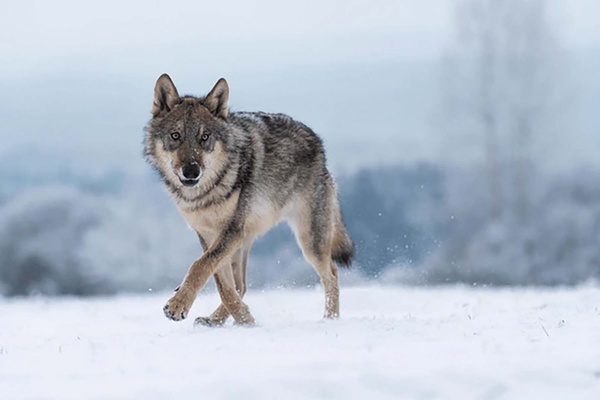
Laws in most of Wyoming allow killing of wolves using any method, but wildlife advocates want to outlaw common torture practices such as chasing wolves and coyotes down with snowmobiles./ Courtesy photo
It’s legal in Wyoming to chase coyotes and, once they drop from exhaustion, run over them with snowmobiles. But recently, a Daniels, Wyo., man named Cody Roberts used his snowmobile to run down a young wolf until it was disabled. Then he taped the wolf’s mouth shut and paraded the injured animal around a local bar, taking photos to commemorate the event. Finally, he killed the wolf.
According to news reports, the Wyoming Game and Fish Department fined the man $250. His only crime: possession of a live wild animal. The more we learn, the worse this disturbing story gets. Most recently, one news outlet released video footage from the state game department showing the muzzled wolf splayed out on the bar floor.
 |
| Keefover |
The single upside to this incident is that it has brought scrutiny to the state of Wyoming’s bureaucratic indifference to wolves and other wildlife.
We now know that the responsible management agency can’t effectively punish one of the worst acts of cruelty ever exposed in the state. But is that any wonder when we consider that the state funds ineffectual predator-control programs that kill wolves and other wild animals indiscriminately?
This failure stands out starkly when compared to neighboring Colorado, now hosting reintroduced wolves. Although Colorado Parks and Wildlife reported recent wildlife-rancher conflicts, two state agencies, which held many meetings with the public before wolves came back to the state, are already working with those ranchers to prevent and mitigate losses and to provide generous compensation funds.
The new Born to be Wild specialty license plate has already generated more than $60,000 toward the Colorado wildlife department’s nonlethal-conflict prevention fund for wolves. If a wolf, bear or mountain lion causes a livestock loss, the producer is eligible for compensation, as in a case in early April, where wildlife staffers reported that wolves had killed two calves.
Most states have limits on “manner of take,” defined as what methods are permitted to kill wildlife. But in what Wyoming calls its “predator zone” – a whopping 85% of the state – wolves, coyotes, red foxes, raccoons, porcupines, jack rabbits and stray cats can be killed using any method.
Methods include hounding, baiting, neck snares, leg-hold traps, shooting wildlife from aircraft and M-44 “cyanide bombs,” courtesy the U. S. Department of Agriculture’s Wildlife Services.
This is all usually undertaken to protect sheep and cattle and grow mule-deer herds for hunters. But conservation biologists find otherwise.
We know that livestock losses attributable to wolves and other native carnivores are rare. Using government data, the Humane Society of the United States found that losses to cattle and sheep caused by wolves, cougars and grizzly bears amounted to less than 1% of those domestic animal inventories in every state containing those wildlife species.
Recent reports have indicated that the Sublette County Sheriff’s Office, where the incident took place, has opened an investigation into the killing of the wolf, and we hope officials will move forward with new charges.
Meanwhile, “wildlife advocates in Wyoming, energized by the wolf torture allegations, plan to push for policy reform,” reports the news outlet Wyofile. In Wyoming now, it is legal and routine to pursue coyotes and wolves by running them down with snowmobiles. The “sports” even have a name: “Chasin’ fur” and “wolf whacking.”
The plight of wolves in Wyoming, along with those in neighboring states Montana and Idaho where similar practices are allowed, highlights the need for increased protections for these animals. On April 8, the U.S. Fish and Wildlife Service was sued by several wildlife organizations to restore protections for wolves in the Northern Rockies.
In the meantime, a case as shocking as this must never recur. At the least, Wyoming lawmakers need to eliminate the predator zone and strengthen animal cruelty laws. In Colorado, wild animal or not, such an incident would be classified as “aggravated cruelty to animals.”
That is the decent thing to do for animals, and when we take into account the links between cruelty to animals and interpersonal violence, we should see it as essential for a civil society as well.?
Wendy Keefover is a contributor to Writers on the Range, writersontherange.org, an independent nonprofit dedicated to spurring conversation about Western issues. She works for the Humane Society of the United States as senior strategist for native carnivore protection. ?
-
- 06/18/2026
- Where the plastic meets the road
- By Kathleen O'Connor
-
School District 9-R leads local effort to recycle hard-to-process plastic film
- Read More
-

- 06/11/2026
- Wild at heart
- By Luke Mehall
-
Remembering Katrina Blair’s crusade to reclaim the power of wild plants and lands
- Read More
-

- 06/11/2026
- Book Burro hits the road
- By Missy Votel
-
Maria’s vintage Airstream-turned-bookmobile aims to deliver free books across region
- Read More
-

- 06/11/2026
- Picking up speed
- By Missy Votel
-
Propelled by $1.1M in grants, Phase 2 of Silverton’s Baker’s Park to begin this summer
- Read More
- Un-making history
- 06/18/2026
-
Last week in this space, we told you about the bigly pushback against Trump’s attempt to white-wash American history at national parks. In trying to blot out the bad parts, in 2025 Trump announced an executive order titled "Restoring Truth and Sanity to American History" and directed Interior Secretary Doug Burgum to ensure monuments, memorials, statues and markers "do not contain descriptions, depictions or other content that inappropriately disparage Americans past or living."
- Not so fast
- 06/11/2026
-
Remember last year, when the Trump administration asked national park goers to “report any signs or other information that are negative about either past or living Americans or that fail to emphasize the beauty, grandeur and abundance of landscapes and other natural features”?
Well, it seems park-goers have pushed back, bigly.
- Getting gassed
- 06/04/2026
-
Gas prices are once again giving America something to complain about. And while the local beer meisters at Ska Brewing can’t fix the price at the pump, the brewery is offering one small bit of relief: a new light beer that costs one cent less than the price of a gallon of unleaded gas.
Introducing Ska’s newest brew: West’s Easy Light Lager, because “everything else is so hard.”
- Short legs, big party
- 05/28/2026
-
On most days, Tracy Harwood spends her time as a court clerk for the City of Durango. But next Thurs., June 4 – International Corgi Day – she hopes to bring something entirely different to town: short legs, wiggly butts and oversized personalities.