
A gray area
Stepping up to protect public lands access via 'corner crossings'
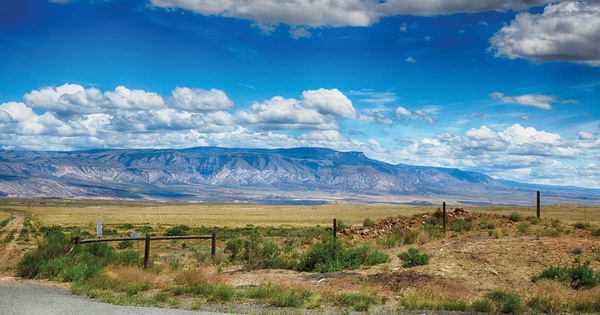
Bighorn Mountain Recreation Area 2017, / Gary Tognoni, Istock photos
Last summer, hunters and anglers stepped up in a huge way to help defeat a proposal by Sen. Mike Lee, R-Utah, to sell off millions of acres of public land.
In the end, public land defenders won. Confronted by an outpouring of opposition, Lee removed his amendment to the Trump administration’s “Big Beautiful Bill.” But the struggle demonstrated that we needed to act sooner.
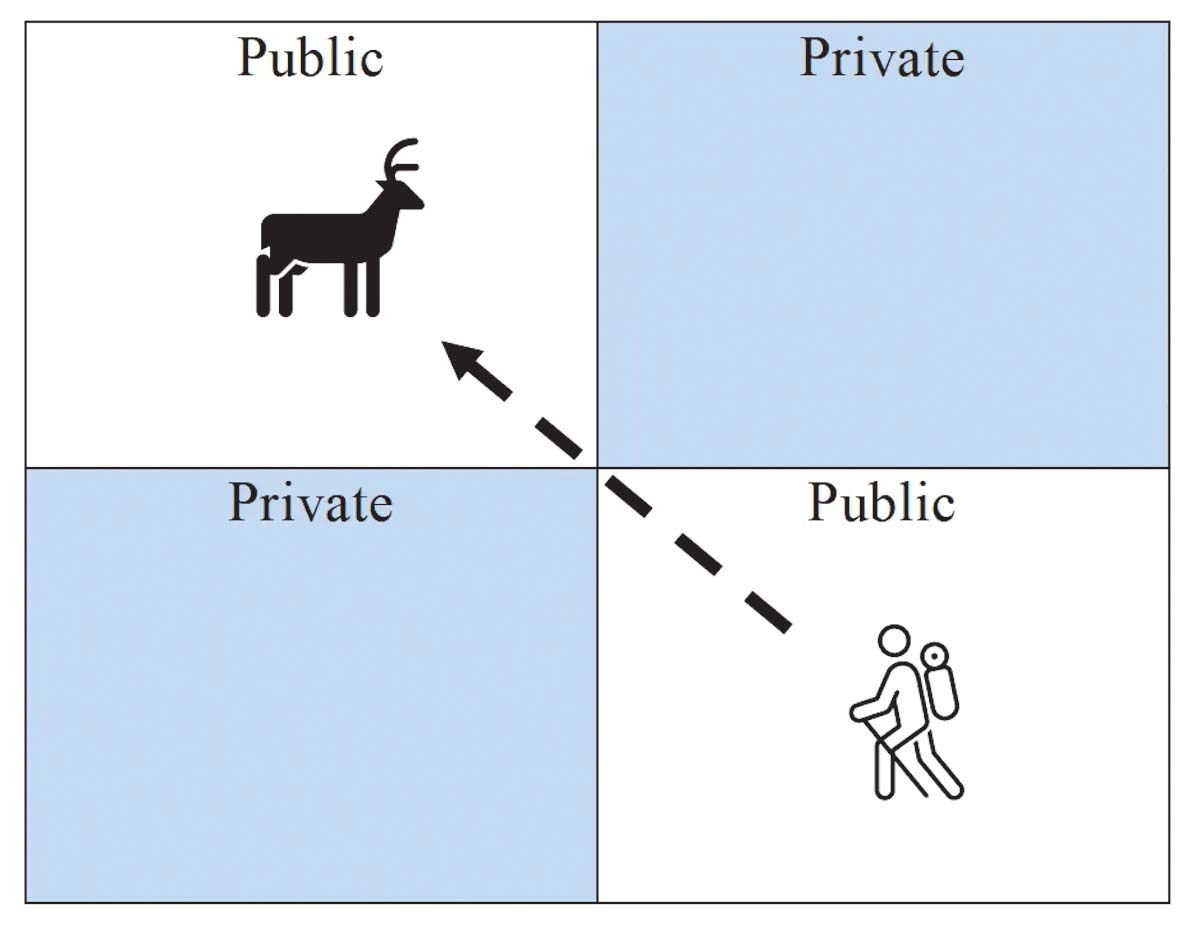 Four elk hunters in Wyoming showed us what stepping up can look like. Instead of sitting back and looking sadly at a huge chunk of prime elk country blocked by a billionaire’s ranch, they built a special ladder. By climbing over the billionaire’s land, they crossed from one corner of public land to another, setting in motion a legal process that freed up millions of acres of public land in six states.
The hunters’ creativity in the field has become an inspiration. That’s why the two of us – state legislators in Wyoming and Montana – are teaming up to fight for public land access, just as the hunters in Wyoming’s Elk Mountain did.
Across the West, millions of acres of public land are still legally open but practically inaccessible. At checkerboard corners where public and private land meet, a person can stand on public ground, look directly at more public ground an inch away, and still be told they cannot step from one to the other.
In Wyoming, the question of corner crossing dragged through the courts for years. Last October, the Supreme Court refused to hear a case challenging a lower court decision allowing corner crossing. The ruling establishes that crossing between public land corners without touching private property does not constitute trespass.
That means corner crossing remains legal in the 10th Circuit states of Wyoming, Colorado, Utah, Oklahoma, Kansas and New Mexico.
In other states, a legal gray area remains. In Montana, Gov. Greg Gianforte and the director of Fish, Wildlife and Parks say that corner crossing remains unlawful under state law. That declaration puts political clout behind the status quo, where public land remains accessible to those who can buy control of key parcels and hire fancy attorneys.
The consequences are not abstract. For working families, access to public land is a necessity, not a luxury. It is how people put meat in the freezer as grocery prices rise. It is how parents take their kids outdoors without paying fees. It is how rural communities hold on to traditions that are increasingly out of reach.
We, as elected leaders, need to act. We can’t let confusing court decisions or laws that don’t serve the people be the last word on any issue dealing with public land.
That’s why the two of us support state legislation that will clarify the law and protect public access. The stakes are high and rising. Land prices have become astronomically out of reach for most people, outside wealth continues to pour into our states, and politicians in Congress and our state legislatures increasingly side with wealthy landowners.
Unless we act to clarify corner crossing in law, access will continue to shrink. The result will be a two-tiered system: a West for people who can afford exclusive access, another West that’s diminished for everyone else.
Corner crossing may be ingenious, but it is not radical. It is a straightforward affirmation that public land needs to be available to the public. We don’t think this is a partisan issue. Hunters, anglers, hikers, conservationists, landowners and working families span every political stripe in our states. Fair access to public land for future generations is a shared value.
The choice ahead is simple. We can defend public land as a public right for our children and grandchildren, or we can allow the West to slide toward a situation where those with wealth continue to block vast swaths of public land.
As legislators from Montana and Wyoming, we know which side we are on.
The writers are contributors to Writers on the Range, writersontherange.org, an independent nonprofit dedicated to spurring lively conservation about the West. Karlee Provenza is a Democrat serving House District 45, Laramie, in the Wyoming House of Representatives. Democrat Joshua A. Seckinger serves House District 62, Bozeman, in the Montana House of Representatives. For information about the bills they propose, contact: Karlee.Provenza@wyoleg.gov or Joshua.seckinger@legmt.gov.
-
- 05/28/2026
- Quick 'n' Dirty
- By Missy Votel
-
Help for the Demon Bridge, Highway 550 N closure, and fire mitigation falls off
- Read More
-
- 05/28/2026
- Getting crafty
- By Haylee May / Colorado Public Radio
-
Colorado brewers buck national trend by adapting to changing times
- Read More
-

- 05/21/2026
- Taming the ART
- By Missy Votel
-
City chooses education, striping over speed limit on River Trail
- Read More
-

- 05/21/2026
- Planned Parenthood reopens
-
PPRM president credits local community in getting clinic running again
- Read More
- Short legs, big party
- 05/28/2026
-
On most days, Tracy Harwood spends her time as a court clerk for the City of Durango. But next Thurs., June 4 – International Corgi Day – she hopes to bring something entirely different to town: short legs, wiggly butts and oversized personalities.
- River cowboy
- 05/21/2026
-
It’s a mash-up made in Westernwear heaven. Sort of. Seems Chaco, the purveyor of the iconic strappy dirtbag river rat footwear, has joined forces with Wrangler, as in tight jeans, big belt buckles, bull riding and snap shirt fame.
- Making plans
- 05/14/2026
-
Wondering what’s up with the old 9-R Admin building at the end of E. 2nd Avenue that was going to be a fire department, then wasn’t going to be a fire department and is now going to be City Hall and the Police Department?The City of Durango will demystify plans for the historic building during a public session Wed., May 20, 5:30-7:30 p.m. at the Durango Recreation Center.
- Going for the gold
- 04/30/2026
-
Turns out, blondes do have more fun, or at least they get more awards. Last week, Ska Brewing won the gold medal for its True Blonde Ale in the English-Style Pale Ale category at the 2026 World Beer Cup. This is the third win for the Blonde at the World Beer Cup, held in Philadelphia on April 22 and pegged as one of the world’s most prestigious beer competitions.